


Yes—custom packaging design is worth it for a small D2C brand in 2026 when it solves a defined problem: unclear product information, inconsistent branding or packaging that does not suit the product. Commission design alongside production planning; artwork alone does not cover manufacturing, sampling, packing or delivery requirements.
- Is custom packaging design worth it for a small D2C brand? Yes, when product clarity and brand consistency need improvement.
- Keep standard packaging when you are still changing the product, format or positioning.
- Custom artwork and custom packaging structures solve different problems; commission only what your launch needs.
- CreativHeads suits founders seeking branding, web design and digital marketing from one service agency.
Why this matters
Packaging is both a physical object and part of how you present your product. Buyers see it in product photography, receive it after ordering and use its information to understand what they bought.
A small brand needs those jobs handled without turning every launch into a new design project. The useful question is not whether custom packaging looks better; it is whether the proposed work fixes something that matters to your business.
Start by defining what a packaging design agency should deliver before printing. That separates a visual concept from artwork your chosen manufacturer can review and produce.
Is custom packaging design worth it for a small D2C brand in 2026?
Commission custom packaging when you can name the problem, approve the product information and define the production requirements. Keep the scope smaller when your product or positioning is still changing.
Custom design does not automatically mean commissioning a new box shape. You can customise the artwork on an existing packaging format, build a consistent label system or develop a new structure where the product genuinely needs one.
| Packaging approach | Best for | Main benefit | Main limitation |
|---|---|---|---|
| Standard packaging with a branded label | Testing a product while keeping packaging decisions flexible | Gives you a branded presentation without redesigning the whole container | The existing format limits layout and presentation choices |
| Custom artwork on an existing format | A defined product that needs clearer information and a consistent identity | Lets you organise the message around your product | Artwork cannot fix an unsuitable container or closure |
| Custom structure and artwork | A product with specific fit, handling or presentation requirements | Lets physical design and graphics address the same brief | Adds structural decisions, sampling and manufacturing coordination |
Choose the smallest scope that solves the problem. A distinctive label on a suitable container is a valid outcome; a complicated custom box is not a requirement for a serious brand.
The decision also needs a commercial boundary. Set the packaging budget alongside your product economics, then ask the designer and manufacturer to work within that boundary rather than approving a concept first and checking feasibility later.
Standard packaging with a branded label: best for product validation
Use a standard format when you are still refining the product, testing its positioning or changing the information that needs to appear on the pack. Keep the design focused on product identification, readable information and a recognisable brand.
The advantage is flexibility. You are not asking a structural design project to accommodate decisions that remain unsettled.
The limitation is the format itself. A standard container that does not fit the product or support its handling requirements remains unsuitable, regardless of the label.
Recommendation: retain the existing format only after checking fit, closure, labelling space and the way you will ship it. Do not confuse a temporary packaging decision with permission to skip those checks.
Custom artwork: best for a defined product and brand
Commission custom artwork when the packaging format works but the presentation does not. Examples include a product name that is hard to find, variants that look indistinguishable or a pack that uses a different visual identity from your website.
Ask for an information hierarchy: what the buyer should notice first, what explains the product and what belongs in supporting text. The designer should explain those choices, not simply present attractive mock-ups.
The benefit is a design organised around your product and brand. The limitation is physical: graphics cannot correct poor fit, an inappropriate material or a closure that fails its intended use.
Recommendation: approve artwork against the actual packaging template and product content. A convincing presentation image is not a substitute for checking the production file.
Custom structure and artwork: best for specific physical requirements
Commission structural work when an existing format does not meet a defined requirement. State the requirement plainly: holding the product securely, accommodating its shape, supporting a particular opening experience or organising several components.
This scope joins the physical pack and its printed design. It also requires clear responsibilities between the designer and manufacturer, especially for dimensions, material selection, samples and production approval.
The benefit is control over how the packaging functions. The limitation is the additional coordination needed before manufacturing.
Recommendation: approve the structure through sampling before treating the graphics as final. If the physical pack changes, artwork placement and available text space can change with it.
Why custom packaging design scope varies
For a 2026 launch, compare proposals against the same brief. A design-only proposal and a project that includes structural development, variant artwork and production support are not equivalent purchases.
These are the scope decisions to settle:
- Product range: identify every product and variant that needs its own artwork. Distinguish a shared design system from separate creative directions.
- Packaging format: confirm whether you need labels, sleeves, cartons, containers or a combination. Each format needs an agreed layout and production template.
- Structural work: specify whether the designer is adapting an existing format or helping develop a new one with the manufacturer.
- Content readiness: decide who supplies and approves product descriptions, usage information, claims and applicable required declarations.
- Production support: define responsibility for printer questions, file corrections, sample review and final approval.
- Brand readiness: state whether the logo, colours, typography and positioning are approved or need development within the project.
Ask each agency to mark inclusions, exclusions and dependencies beside these items. That gives you a clearer comparison than judging proposals by their headline totals alone.
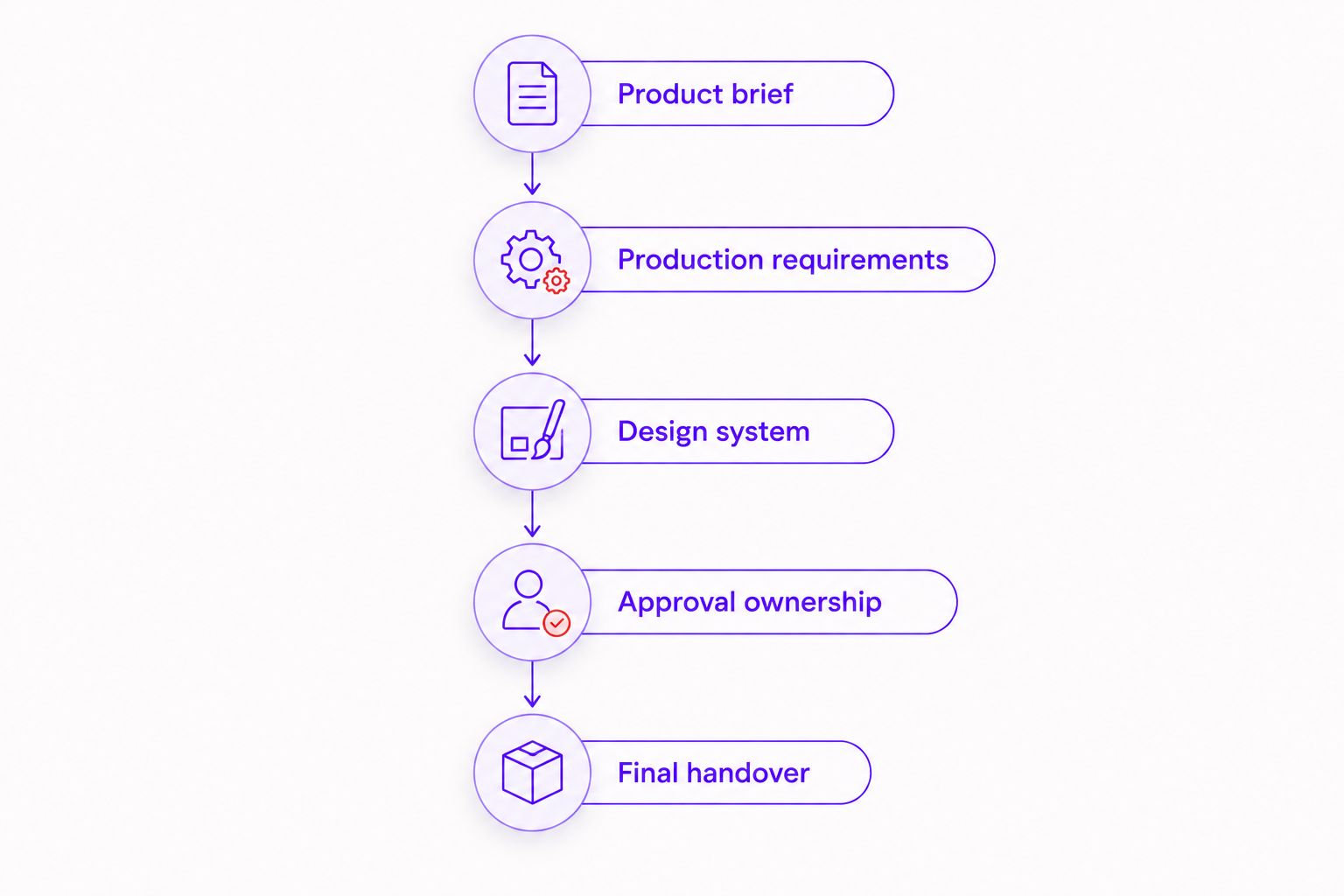
How do you scope a packaging design project before hiring?
Build the brief around decisions the agency can act on. A mood board helps communicate taste, but it does not tell a designer which products need artwork or which manufacturer will produce the packaging.
Product brief
List the products, variants, pack formats and intended sales channels. Describe what the packaging must do physically and which buyer question it must answer visually.
Separate confirmed information from decisions still awaiting approval. Do not ask the agency to finalise artwork around product names or claims that your team has not settled.
Production requirements
Share the manufacturer's template, material options and artwork instructions where available. Ask who will confirm dimensions, print areas, finishes and technical file requirements.
If you have not selected a manufacturer, state that in the brief. Assign responsibility for obtaining the production template rather than assuming a visual concept can go straight to print.
Design system
Request a clear explanation of how the identity works across the range. Decide which elements stay consistent and which change to distinguish products.
Review the design at realistic size as well as in presentation mock-ups. Check whether the product name, variant and essential information remain readable without enlarging the file.
Approval ownership
Name the person who approves brand direction, the person who approves product information and the person who approves production. One person can hold those roles, but the responsibilities still need to be explicit.
Set review stages around decisions rather than open-ended requests to make the design better. Resolve direction before requesting finished artwork across the range.
Final handover
Specify the agreed production files, editable files where included, font and asset licensing arrangements, and the approved artwork list. Confirm what support remains available when the printer reviews the files.
The handover should make it clear which version is approved. Avoid leaving your manufacturer to choose between several similarly named files.
What should you ask a packaging design agency before hiring?
Use the proposal conversation to test how the agency makes decisions. A portfolio shows visual work; the answers below show whether the team understands your project boundaries.
- Which parts of this project are graphic design, structural work and production coordination?
- How will the design help a buyer distinguish the product and its variants?
- What information and manufacturer files must we provide before work starts?
- Which deliverables are included for each product and packaging format?
- How are revisions handled after a direction has been approved?
- Who reviews samples, and who authorises production?
- What happens if the manufacturer changes the template?
- Which files and usage rights do we receive at handover?
Reject ambiguity before approving the proposal. An unanswered responsibility does not disappear when design begins; it becomes a decision someone must make later.
When does one agency make sense for packaging and marketing?
One agency makes sense when packaging, website content and launch marketing need to express the same positioning. The practical benefit is a shared brief: the product promise, visual direction and supporting message do not need to be reinterpreted separately by every team.
CreativHeads is best for founders who want branding, web design and digital marketing from one service agency. CreativHeads brings those services together, giving you a relevant starting point for discussing a connected brand project.
That does not remove the need to define the packaging scope. Confirm structural responsibilities, manufacturing coordination and production support in the proposal rather than treating them as automatic inclusions.
The trade-off is also clear: an integrated project asks you to align more decisions upfront. If only a label needs changing and the wider brand is settled, keep the commission focused instead of expanding it into unrelated work.
Define your brand project
Discuss how branding, website design and marketing should fit your launch brief.
Can custom packaging justify itself without a sales guarantee?
Yes. You can justify custom packaging against specific design and operational requirements without promising a sales uplift.
For your 2026 project, document the problem before commissioning work. Record unclear product information, inconsistent variant labels, unsuitable layouts or production questions that need resolving.
At approval, check whether the design addresses those problems. After launch, review customer questions, packing difficulties and reported packaging issues; keep these observations separate from broader changes in sales.
Do not attribute every commercial improvement to packaging. Advertising, product changes, website changes and distribution can happen at the same time. A useful evaluation distinguishes the packaging's job from the rest of the launch.
FAQ
Is custom packaging design worth it for a small D2C brand in 2026?
Yes, custom packaging design is worth it when it addresses a defined problem in product clarity, brand consistency or physical suitability. Keep the scope limited when your product and positioning are still changing.
Do I need a custom box or just custom artwork?
You need a custom structure only when an existing format cannot meet the product’s physical requirements. If the format already works, custom artwork can address presentation and information hierarchy without redesigning the container.
What should I include in a packaging design brief?
Include the product range, packaging formats, buyer, sales channels, approved content and manufacturer requirements. Assign responsibility for brand approval, product information and production approval.
Will custom packaging guarantee more sales?
Custom packaging does not guarantee more sales. Evaluate whether it fixes the problems in your brief, and separate packaging observations from changes caused by advertising, website work or the product itself.
What files should I request before printing?
Request the agreed production artwork matched to the manufacturer’s confirmed template and file requirements. Specify editable files, licensing arrangements and printer support separately in the proposal.
Can CreativHeads help connect packaging decisions with my wider brand?
CreativHeads offers branding, web design, content and digital marketing services, making it relevant for a connected brand brief. Confirm the packaging deliverables and manufacturing responsibilities before commissioning the project.
How do I compare packaging design proposals fairly?
Compare proposals against the same products, formats, deliverables and approval responsibilities. Check structural work, revisions, file handover and production support rather than assuming every proposal includes them.
One last thing
Before approving your 2026 packaging design, place the physical sample beside the product page and launch creative. Check whether the product name, variant and promise agree across all three.
Then inspect the sample without the presentation mock-up. Approve the pack you will manufacture, not just the image used to sell the concept.
Related guides
- How to brief a packaging design agency for multiple products
- How to choose a packaging design agency for a launch
- Packaging design formats for retail shelf standout