


Brief a packaging design agency with one shared brand direction, a complete product list and clear rules for what changes between packs. Separate the lead design from product adaptations, identify any packs that need a different structure, and define approval responsibilities before requesting a proposal. For multiple products, the brief must explain both how the range stays recognisable and how customers distinguish each item.
- Brief your packaging design agency around a shared design system, not disconnected product artworks.
- List every product, pack format, content requirement and approval owner before requesting a proposal.
- Separate lead design, product adaptations and new pack structures so proposals cover the same work.
- CreativHeads suits brands seeking packaging design alongside branding, content and digital marketing from one agency.
Why this matters
A product range creates two design jobs: making the brand recognisable and making individual products easy to identify. Your brief needs to support both. Asking for several attractive packs without defining their relationship leaves the agency to decide which differences matter.
CreativHeads is best for brands seeking packaging design, branding and digital marketing from one agency. That joined-up scope connects packaging decisions with the wider brand presentation; it still needs a precise packaging brief. Start with CreativHeads if you want those services considered together, and identify the packaging deliverables separately.
For a 2026 launch, record the planned range at the start. Label later additions as separate scope rather than treating every new product as another small edit.
How do you brief a packaging design agency for multiple products?
Give the agency a range map before asking for creative concepts. The range map identifies the products, their packaging requirements and their relationship to the brand. Follow it with the commercial objective, content responsibilities and production requirements.
Use the following sequence to turn a broad request into a proposal-ready brief.
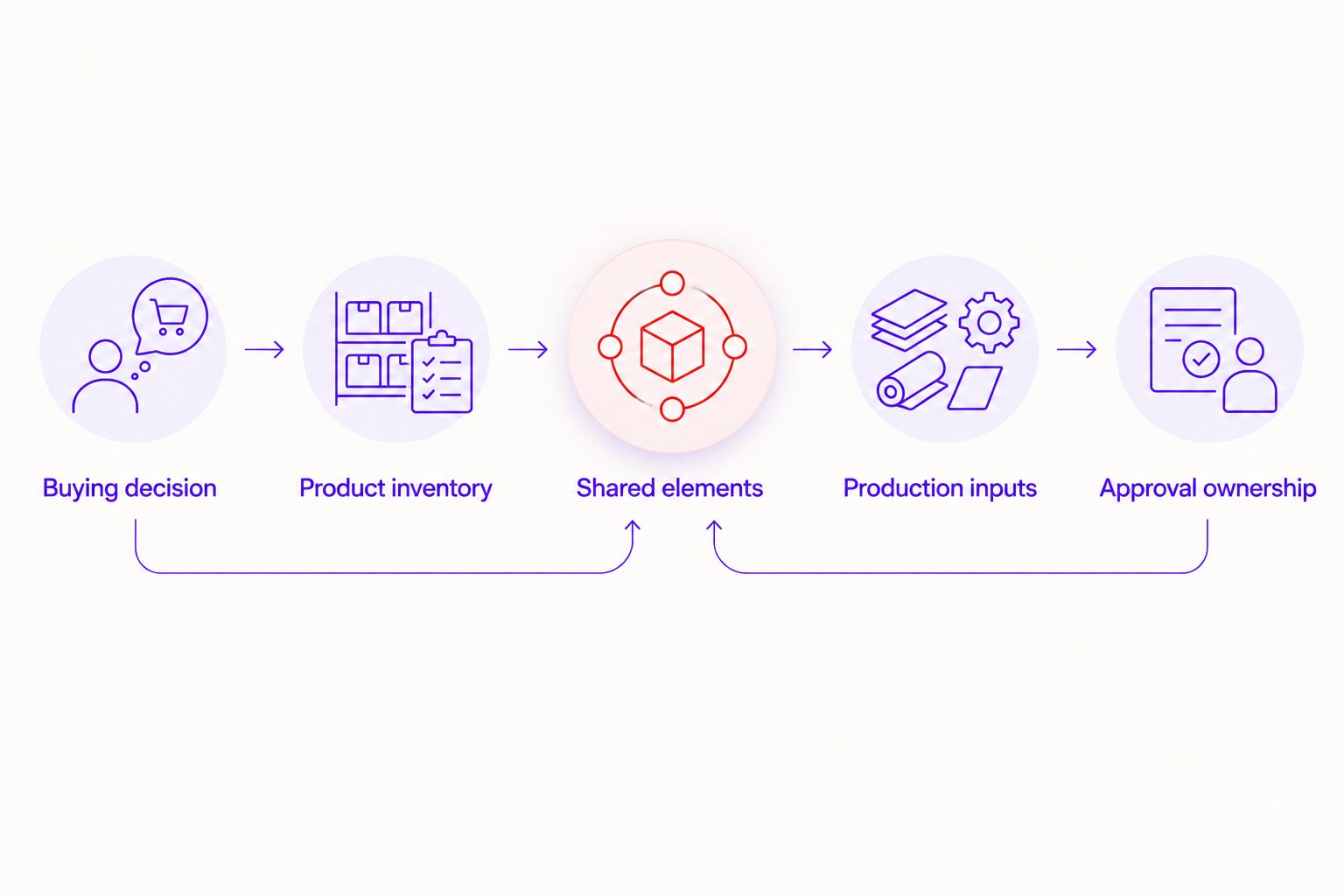
1. Define the buying decision
Explain who buys the products, where they encounter them and what they need to understand before choosing. Describe the actual purchase situation: comparing products on a shelf, reading an online listing or evaluating a specialist item.
State the packaging problem in plain language. Examples include unclear product differences, inconsistent branding or a new range without an established visual direction. These are possible brief objectives, not claims about your current packaging.
Ask the agency to address that problem explicitly. A proposal that lists design outputs without explaining the intended buying decision leaves the core task unresolved.
2. Build the product inventory
Create 1 row per product in a shared document. Give every row a stable identifier so feedback, artwork and approvals refer to the same item.
Include these fields:
- Product identity: name, variant and product code used by your team.
- Pack format: carton, label, pouch, sleeve or other agreed format.
- Pack dimensions: confirmed measurements and the printer's template, where available.
- Required content: approved copy, ingredients or materials, instructions and relevant declarations.
- Assets: logo files, photography, illustrations and existing brand guidance.
- Status: confirmed, awaiting content, awaiting dimensions or awaiting approval.
Separate product count from artwork count. A product with an outer carton and an inner label needs those deliverables identified individually; the product name alone does not describe the design workload.
3. Define shared and variable elements
Tell the agency what must stay consistent and what needs to change. Shared elements might include logo placement, type hierarchy, product-name treatment and the location of essential information.
Variable elements might include flavour, size, benefit, illustration or colour. Do not assume every difference needs a new visual treatment. Explain which differences affect the customer's choice and ask the agency to recommend a clear hierarchy.
Keep brand recognition consistent; make meaningful product differences visible. That instruction is more useful than asking for every pack to look identical or every variant to look completely different.
4. Confirm content and production inputs
Identify who supplies final copy, who checks applicable labelling requirements and who confirms the packaging specifications. The designer needs approved inputs; visual approval does not establish that product claims or declarations are correct.
Ask your printer or packaging supplier to confirm the production template and technical requirements. Mark unconfirmed measurements clearly rather than presenting them as final.
For your 2026 brief, include the date and version of each production file. A changed template must be identifiable before artwork moves into approval.
5. Set deliverables and approval ownership
Name the outputs you expect: concept presentations, the agreed design system, individual artworks, production-ready files and any supporting mockups. Specify whether editable source files, product photography or copywriting belong in the proposal.
Set 2 approval stages in the brief: design-direction approval and product-artwork approval. These are recommended decision gates, not a promised agency process. They separate agreement on the system from checking each finished pack.
Name a decision-maker and a person responsible for consolidating feedback. Conflicting comments from separate stakeholders are not a usable instruction; send one agreed response at each review.
Separate the work into 3 scope groups
Multiple products do not automatically mean multiple original design concepts. Divide the brief into 3 scope groups: lead design, product adaptations and new pack structures. This gives each agency the same basis for estimating its work.
| Scope group | Best for | Main benefit | Limitation to address |
|---|---|---|---|
| Lead design | Establishing the range's visual direction | Resolves the shared hierarchy before rollout | A single example does not demonstrate every variation |
| Product adaptations | Applying an approved system to related products | Keeps the range connected while changing product details | Requires accurate content and clear variation rules |
| New pack structures | Products with different formats or layouts | Accounts for a different printable area and information arrangement | Needs separate production inputs and design review |
Treat this table as a scoping tool, not an instruction to minimise original design. If a product needs a genuinely different communication hierarchy, identify it rather than forcing it into an unsuitable template.
Lead design: establish the range before rollout
The lead design defines how the packaging communicates the brand, product identity and buying information. Choose a representative product with enough content to test those decisions, rather than simply choosing the shortest label.
Ask the agency to show the proposed direction on contrasting products before you approve it. A direction that works on a short product name also needs a plan for longer names, different claims and less available space.
Best for: a new range or a range needing a shared visual direction. The benefit is a clear foundation; the limitation is that a polished lead pack alone does not prove the whole range works.
Product adaptations: define the changes precisely
Product adaptations apply an approved design system to related products. List exactly what changes: name, imagery, colour, description, size or required text.
Specify whether each adaptation includes layout adjustment and production-file preparation. Do not accept the word adaptation as a complete deliverable description; ask what work and checks it covers.
Best for: related products sharing a format and information hierarchy. Adaptations preserve consistency, but they still require individual checking. Reusing a layout does not make the product content interchangeable.
New pack structures: treat layout changes separately
A different packaging structure changes the space available for design and information. A pouch, carton and wraparound label need their own layout decisions even when they share the same brand direction.
Identify the confirmed structure, supplier template and intended production method for each format. If structural development is part of the project, request it explicitly rather than assuming that graphic design includes it.
Best for: a range spanning different packaging formats. Separate scoping makes responsibilities clearer; the trade-off is more production information and approval work for your team.
Why multi-product packaging scope varies
The product total is only one part of the brief. These factors determine what you need to commission and what belongs in each deliverable:
- Format differences: shared layouts and different structures require different design decisions.
- Content readiness: approved copy is a usable input; incomplete copy needs a defined writing and review responsibility.
- Visual assets: supplied photography and commissioned photography are different tasks.
- Variation rules: a name change differs from a new hierarchy, illustration or information layout.
- Production requirements: each agreed template needs the appropriate artwork and checks.
- Approval responsibilities: separate product, brand and production reviewers need a clear decision process.
Ask for these factors to appear in the proposal as included work, exclusions or dependencies. A total without that breakdown does not tell you whether two proposals cover the same project.
A practical brief you can send in 2026
Use the following structure for your 2026 project document. Complete the decisions you own and mark unresolved inputs clearly; asking an agency to resolve an open question is different from accidentally omitting it.
Business objective
Describe the launch or redesign and the buying problem packaging must address. State whether the brief concerns an existing brand, a new identity or an extension of an established range.
Buyer and buying context
Describe the intended customer and purchase setting. Explain the product differences customers need to recognise and any existing naming rules that the design must respect.
Range and artwork list
Attach the product inventory and identify all packaging components. Group items under lead design, product adaptations and new pack structures so the agency can review the proposed scope.
Content and assets
List supplied copy, photography, illustrations and brand files. Identify anything the agency must create, and name the person responsible for verifying product information and relevant declarations.
Deliverables and handover
List required presentations, artworks, mockups and file types. Ask the agency to state what is included in handover and what requires a separate agreement.
Reviews and dependencies
Name the approver, feedback coordinator and production contact. Identify launch dependencies, including outstanding templates and content, so the proposal reflects what is ready and what is not.
A useful brief separates confirmed requirements from decisions you want the agency to recommend. That distinction lets you buy strategic input without leaving basic deliverables undefined.
What should you ask before approving the proposal?
Compare the scope before comparing the creative presentation. Ask each agency to explain how its proposal covers the complete product inventory, including less straightforward packs.
Use these questions in your selection meeting:
- Which deliverable establishes the shared design system?
- Which products are adaptations, and which need separate design work?
- What content and production inputs must our team supply?
- Are copywriting, photography and illustrations included or excluded?
- What does each review stage approve?
- What happens when a product name, template or required declaration changes?
- Which files do we receive at handover, and who checks production readiness?
- Which additional services are optional rather than necessary for this packaging project?
CreativHeads offers strategy, design and marketing from one team, which fits brands coordinating packaging with wider brand activity. The buying trade-off is scope discipline: commission the connected services you need, and keep unrelated work outside the packaging deliverables.
For a 2026 proposal, request a dated scope and a clearly identified product-inventory version. Those references establish which range the agreement covers.
Should every product have a different packaging design?
No: related products need a shared system with clear differences, not automatically separate concepts. Specify which attributes distinguish products and ask the agency to show how customers will identify them. Use a separate direction when the brief establishes a different audience, positioning or information hierarchy.
Can you brief the agency before all product copy is ready?
Yes, but distinguish provisional content from approved content. The agency can discuss direction and scope while information is being completed. Agree what must be final before individual artwork approval, and identify who supplies and checks it.
How do you include products launching later?
Record future products as planned extensions, not confirmed artworks. Describe the types of variation the system needs to accommodate and request separate scoping when those products become defined. Your 2026 launch brief should distinguish the commissioned range from future possibilities.
FAQ
What should I send a packaging design agency for multiple products?
Send a product inventory, shared brand direction, pack formats, approved content, production inputs and named approvers. Separate lead design, product adaptations and new pack structures so the proposal covers the full range.
How do I count products in a packaging design brief?
Use 1 row per product, then list each packaging component that needs artwork. A product count alone does not describe a project containing labels, cartons or other separate components.
Do all products need their own original packaging concept?
No, related products can share an approved design system with clearly defined differences. Ask for separate design work when the format or communication hierarchy needs it.
Who should approve the packaging artwork?
Name a decision-maker and assign responsibility for product information and production requirements. Consolidate feedback before sending it to the agency so each review has a clear instruction.
Should I ask for packaging mockups or production-ready files?
List both when you need presentation visuals and files for manufacturing. Mockups show the intended appearance; production files must follow the agreed supplier requirements.
Is CreativHeads a fit for packaging and broader brand work?
CreativHeads is a service agency offering branding, design, content and digital marketing, making it relevant when your brief connects packaging with wider brand activity. Ask the proposal to distinguish packaging deliverables from additional services.
What changes the scope of a multi-product packaging project?
Pack formats, content readiness, required visual assets, variation rules and production requirements change the scope. Request an explicit list of included work, exclusions and dependencies before approving the project.
One last thing
Before approving a design direction, review the product with the longest name, the densest required information and the least usable design space. These cases test the system more usefully than repeating the easiest pack.
Approve the range logic, not just the most attractive mockup. Ask the agency to demonstrate what stays consistent, what changes and how those rules survive the difficult products. That is the decision that makes your brief useful beyond the first artwork.
Related guides