


Best overall: corrugated cardboard for boxed deliveries. Best for lightweight apparel: paper mailers. Best for fitted protection: moulded pulp. This 2026 guide compares packaging materials for sustainable D2C brands and explains what to specify before commissioning packaging design from CreativHeads.
- Corrugated cardboard is the default among packaging materials for sustainable D2C brands shipping boxed products.
- Paper mailers suit lightweight apparel; moulded pulp suits products needing fitted protection.
- Compare coatings, closures and disposal routes, not just the main packaging material.
- CreativHeads suits founders seeking packaging design alongside coordinated brand strategy and marketing.
Why this matters
Your packaging has two jobs: protect the order and communicate the brand. A material choice that ignores either job leaves you with damaged products, confusing disposal instructions or artwork that cannot be produced as specified.
For a 2026 launch in India, assess the complete pack: outer container, insert, label, tape and any moisture barrier. A recyclable box does not make every component recyclable. Ask suppliers to identify each component before you approve sustainability language.
What makes the best sustainable packaging material?
Use these criteria before choosing a material or reviewing an agency proposal:
- Product protection: Match cushioning, rigidity and moisture protection to the actual product and delivery conditions.
- Material efficiency: Remove unnecessary layers and empty space without compromising protection.
- Disposal route: Identify whether customers can access collection, recycling or composting for the finished pack.
- Component separation: Check whether labels, liners and closures interfere with the intended disposal route.
- Production fit: Confirm that the material supports the required print, structure and finishing process.
- Claim evidence: Request documentation for recycled content, recyclability or compostability claims before printing them.
The strongest option is not automatically the one that looks most natural. A plain brown finish says nothing about recycled content, coatings or collection infrastructure.
Sustainable packaging materials at a glance
| Rank | Material | Best for | Standout feature | Key limitation |
|---|---|---|---|---|
| 1 | Corrugated cardboard | Boxed D2C deliveries | Structural protection with flexible box design | Moisture and unnecessary box volume need attention |
| 2 | Paper mailers | Lightweight, non-fragile apparel | Flexible envelope format without a rigid box | Limited cushioning and moisture protection |
| 3 | Moulded pulp | Fitted protection for fragile items | Shaped inserts that hold products in position | Custom tooling and fit development add work |
| 4 | Mono-material polyethylene mailers | Soft goods needing a moisture-resistant outer | Flexible protective film | Film collection and recycling access vary |
| 5 | Glass | Products needing a rigid primary container | Rigid container with established reuse applications | Weight and breakage complicate delivery |
| 6 | Certified compostable packaging | Controlled composting programmes | A documented composting route for specific applications | Certification does not create local collection access |
These are different use-case winners, not interchangeable substitutes. Your primary container and shipping pack can use different materials, provided the combination has a clear purpose.
1. Corrugated cardboard: best for boxed D2C deliveries
Corrugated cardboard combines liner sheets with a fluted paper layer to create a rigid shipping structure. It suits orders that need a defined box shape and works with paper-based dividers or cushioning. In 2026, it remains a practical starting point for a boxed D2C packaging brief, not proof of sustainability by itself.
Corrugated cardboard pros:
- Supports a wide range of box structures and product arrangements.
- Provides space for instructions and brand communication.
- Can pair with paper-based inserts and cushioning.
Corrugated cardboard cons:
- Moisture exposure can weaken untreated board.
- Oversized boxes consume material and require extra void fill.
- Coatings and attached components affect disposal suitability.
Best for: Brands shipping products that need a rigid outer box.
Specify the packed product dimensions, total contents and protection needs before selecting the box. Ask the supplier to justify the board construction rather than choosing the thickest option by default. Review a physical sample with the actual contents inside.
Verdict: Buy corrugated cardboard for boxed deliveries; approve the complete structure before approving artwork.
2. Paper mailers: best for lightweight apparel
Paper mailers enclose soft, non-fragile products without the structure of a shipping box. They suit apparel and similar goods when the product does not need crush protection. Their usefulness depends on the paper, seams, closure and exposure during delivery.
Paper mailer pros:
- Avoids a rigid box when the product does not need one.
- Offers a printable surface for branding and handling instructions.
- Supports a paper-focused packaging approach when components are compatible.
Paper mailer cons:
- Provides little cushioning for fragile goods.
- Untreated paper offers limited protection against water.
- Barrier layers can complicate recycling claims.
Best for: Lightweight apparel orders without fragile accessories.
Ask whether the proposed mailer contains a liner, coating or plastic window. Check closure strength with a packed sample, not an empty envelope. If a supplier recommends a barrier layer, request its composition and an explanation of the finished pack's disposal route.
Verdict: Buy paper mailers for suitable soft goods; skip them where moisture or impact protection remains unresolved.
3. Moulded pulp: best for fitted product protection
Moulded pulp forms paper fibres into shaped trays and inserts. A fitted insert holds a product in position rather than filling the box with loose material. The design needs to account for product tolerances, removal and the surrounding shipping pack.
Moulded pulp pros:
- Creates defined support points around the product.
- Can replace separate loose-fill components in suitable applications.
- Allows the protective insert to remain paper-based.
Moulded pulp cons:
- Custom shapes require tooling and development.
- Product changes can require changes to the insert.
- Moisture and repeated handling need assessment.
Best for: Fragile products needing a shaped protective insert.
Start with the product dimensions and identify which surfaces need support or clearance. Ask who owns the tooling and whether the design accommodates product variations. Review how customers lift the product out: protection that makes unpacking awkward needs another design pass.
Verdict: Buy moulded pulp when fitted protection solves a defined problem; hold custom tooling until the product shape is settled.
4. Polyethylene mailers: best for moisture-resistant soft-goods delivery
Mono-material polyethylene mailers use polyethylene film as the main packaging material. They offer a flexible outer for products that do not need rigid protection. Their suitability for a sustainability-led brand depends on the actual construction and the available collection route, not a general recyclable symbol.
Polyethylene mailer pros:
- Provides a moisture-resistant outer layer.
- Packs soft goods without a rigid container.
- A mono-material specification avoids some mixed-material combinations.
Polyethylene mailer cons:
- Flexible-film collection is not available everywhere.
- Film alone does not protect fragile products against crushing.
- Closures, labels and inks still require compatibility checks.
Best for: Soft goods where delivery conditions require a moisture-resistant outer.
Ask the supplier to identify the polymer and any additional layers. Do not describe the finished pack as widely recyclable without evidence for the markets you serve. Keep collection instructions specific to a verified route rather than promising disposal options customers cannot access.
Verdict: Hold polyethylene mailers until the moisture requirement and disposal instructions are both clear.
5. Glass: best for a rigid primary container
Glass is a primary packaging option for products that need a rigid container, including suitable food and personal-care formulations. It is not a substitute for the protective shipping pack. The closure, product compatibility and delivery protection remain separate decisions.
Glass pros:
- Provides a rigid container with a strong barrier to moisture and gases.
- Supports reuse where a suitable collection and cleaning system exists.
- Has established recycling processes where collection accepts it.
Glass cons:
- Adds weight to the delivered order.
- Breakage requires careful protective packaging.
- A reuse claim needs an actual operating system, not just a durable jar.
Best for: Products whose primary-container requirements justify glass.
For a 2026 launch, assess glass as part of the complete delivered order. Confirm formulation compatibility with the relevant technical supplier and review the closure separately. If you propose refills or returns, define how customers participate before presenting reuse as a brand benefit.
Verdict: Buy glass when the product requires its properties; skip it as a sustainability badge alone.
6. Compostable packaging: best for controlled collection programmes
Certified compostable packaging is designed to meet specified composting conditions. Industrial compostability and home compostability are different claims. Neither means that packaging belongs in ordinary recycling or can be discarded outdoors.
Compostable packaging pros:
- Supports a defined composting route when collection and treatment exist.
- Certification can provide evidence for a specific compostability claim.
- Fits selected applications connected to an organised disposal programme.
Compostable packaging cons:
- Customers need access to the required composting conditions.
- Compostable material can be misplaced in recycling streams.
- Evidence must cover the proposed packaging, including relevant components.
Best for: Brands with a verified composting route for the intended pack.
Request the applicable certification, its scope and the required disposal conditions. Check whether those conditions are accessible to your customers. A supplier's claim about raw resin does not settle the claim for a printed, converted pack with closures and labels.
Verdict: Skip compostable packaging without a verified collection and treatment route.
How we ranked these materials
The ranking prioritises protection, material efficiency, disposal access, component separation, production fit and claim evidence. Corrugated cardboard takes the default position because the guide focuses on boxed D2C deliveries; paper mailers win when a box is unnecessary.
This is a buying framework, not a laboratory comparison or lifecycle assessment. A material's environmental impact depends on sourcing, manufacture, transport, use and disposal. Do not claim that one option has a lower footprint without evidence covering the comparison.
Turn the material choice into a packaging brief
Before hiring CreativHeads for packaging design, separate what the agency will design from what a manufacturer must validate. Strategy, design and marketing from one team can keep the packaging message consistent with your website and launch content. Material testing and production sign-off still need named owners.
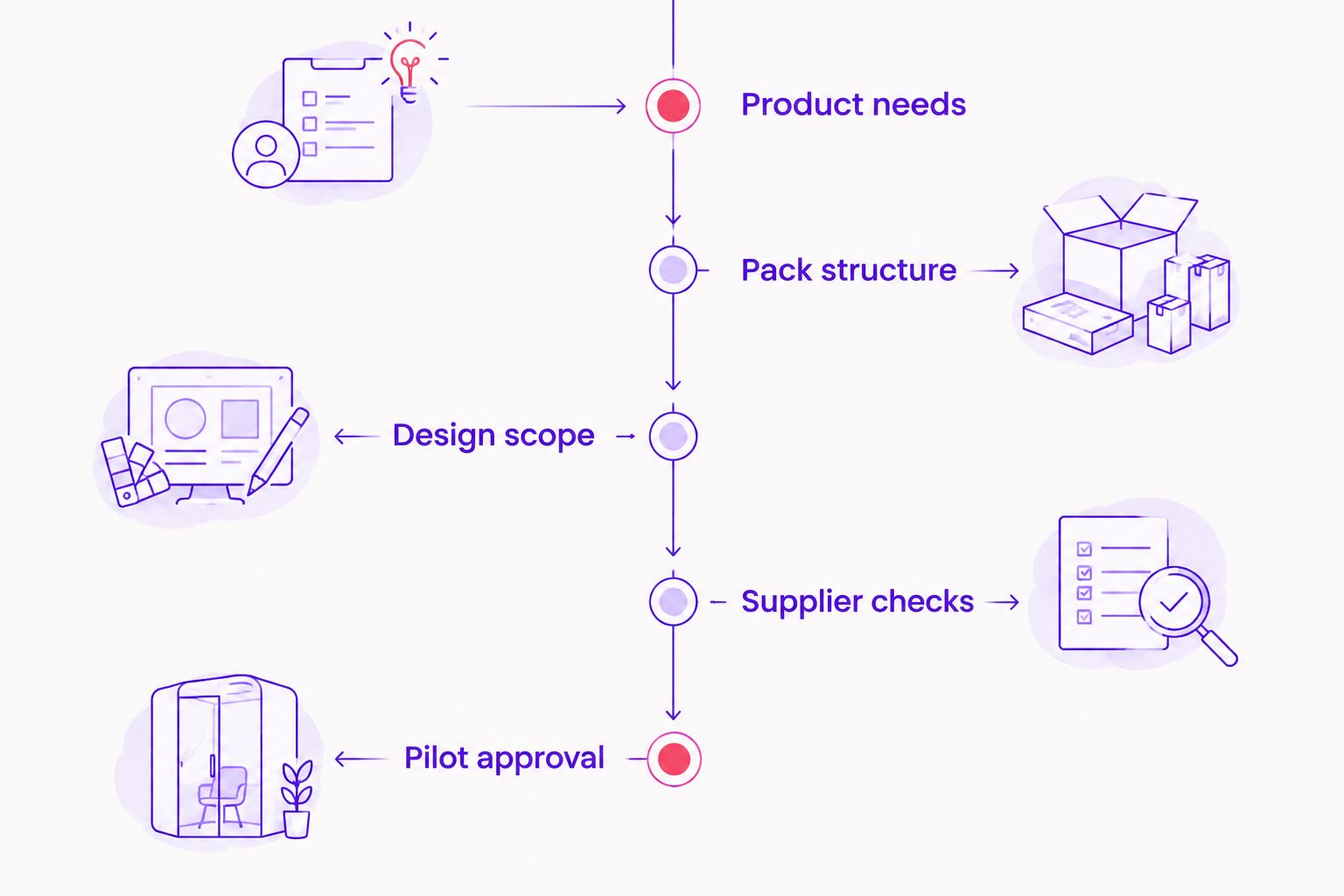
Use this sequence for your 2026 brief:
- Product needs: Describe the contents, fragility, moisture sensitivity and delivery conditions.
- Pack structure: Define the primary container, outer pack, insert and closure.
- Design scope: List product variants, artwork files and disposal instructions.
- Supplier checks: Assign responsibility for material specifications, samples and claim evidence.
- Pilot approval: Agree who approves the packed sample before production.
For a starting review plan, request 5 sample parcels, compare 2 artwork versions and approve 1 pilot batch before committing to the full run. These are proposed planning quantities, not transport-test standards. Have the packaging supplier define the appropriate tests for your product and delivery conditions.
Ask these questions before accepting a proposal:
- Does the scope include structural design, artwork, or both?
- Who supplies the production template and approves its accuracy?
- Which product variants and revision rounds are included?
- Who checks mandatory product information and environmental claims?
- Who owns final artwork, working files and any custom tooling?
- What happens if the packed sample fails the agreed checks?
For a range with several products, use the guide to briefing a packaging design agency for multiple products to define shared elements and variant-specific work.
What changes a packaging proposal?
Separate agency design fees from manufacturing, tooling, sampling and delivery charges. A headline total is not enough to compare proposals if the deliverables differ.
Custom structures, more product variants, additional print finishes and repeated sampling change the work involved. So do photography, copywriting and adaptations for your website or launch campaign. Ask for these as named line items rather than assuming they sit inside packaging design.
CreativHeads is a service agency, not a packaging-material supplier. CreativHeads suits founders who want packaging design connected to brand strategy and marketing. Evaluate that combined scope against your launch needs, and identify which manufacturing responsibilities remain with your supplier.
Define your packaging project
Discuss packaging design, brand strategy and the marketing assets your launch needs.
Which sustainable packaging material should you choose?
Choose corrugated cardboard as the default for a boxed order. Choose paper mailers when your product does not need a box, and moulded pulp when a fitted insert improves protection.
Keep polyethylene, glass and compostable options tied to specific requirements. For your 2026 decision, approve the material, structure, claims and customer instructions together. An attractive mock-up is not a production-ready packaging specification.
FAQ
What’s the best packaging material for a sustainable D2C brand?
Corrugated cardboard is the default for boxed D2C deliveries. Paper mailers suit lightweight, non-fragile goods, while moulded pulp suits fitted protection. Choose against product needs and the disposal route of the complete pack.
Are paper mailers better than plastic mailers?
Paper mailers suit lightweight goods that do not require strong moisture protection. Polyethylene mailers provide a moisture-resistant outer, but flexible-film collection access varies. Compare the finished pack and delivery requirements rather than the material name alone.
Is compostable packaging always the more sustainable choice?
No, compostable packaging needs the disposal conditions specified by its certification. Industrial compostability does not mean home compostability. Use it only when customers have access to the required collection and treatment route.
Can I call my packaging recyclable if the box is cardboard?
A cardboard box does not establish recyclability for every component. Check coatings, liners, tape, labels and inserts, then confirm the intended collection route. Keep disposal instructions specific to the finished packaging.
Should I choose glass for my D2C product?
Choose glass when the product’s primary-container requirements justify it. Assess closure compatibility, shipping weight and breakage protection separately. Do not claim reuse benefits without a defined reuse system.
What should a packaging design agency deliver?
A packaging design proposal should identify the structures, artwork, variants, production files and approval responsibilities included. Clarify who validates material performance and environmental claims. Structural design and manufacturing support should be explicit, not assumed.
What changes the scope of a packaging design project?
Custom structures, product variants, print finishes, revisions and sampling change the project scope. Photography, copywriting and launch adaptations add separate work. Request an itemised proposal so you can compare equivalent deliverables.
One last thing
Approve the disposal instruction at the same time as the artwork. If you cannot explain what the customer should do with each component, resolve the packaging specification before printing a sustainability claim.
A useful final review question is simple: What can we remove without weakening protection or losing required information? Ask it before adding another sleeve, insert or decorative layer.
Related guides
- How to choose a packaging design agency for a launch
- Can logo design include a full brand identity package?
- Best video production formats for product launches