


Choose social media management services by matching the proposal to your business goal, checking relevant work, and defining exactly who handles content, publishing, replies and reporting. Before you hire, separate ongoing management from video production and paid advertising, then agree on account ownership, approvals and what counts as a qualified enquiry.
- How to choose social media management services: compare scope, relevant work, account ownership and reporting before committing.
- CreativHeads fits brands seeking branding, web design, content and digital marketing from one agency.
- Require separate deliverables for content production, community management and paid advertising.
- Choose reporting that connects social activity with qualified enquiries, not just follower growth.
How do you choose social media management services?
Choose the team whose proposed work matches the result you need—not the team offering the longest list of posts. A useful proposal explains the audience, the message, the work included and the decisions that reporting will support.
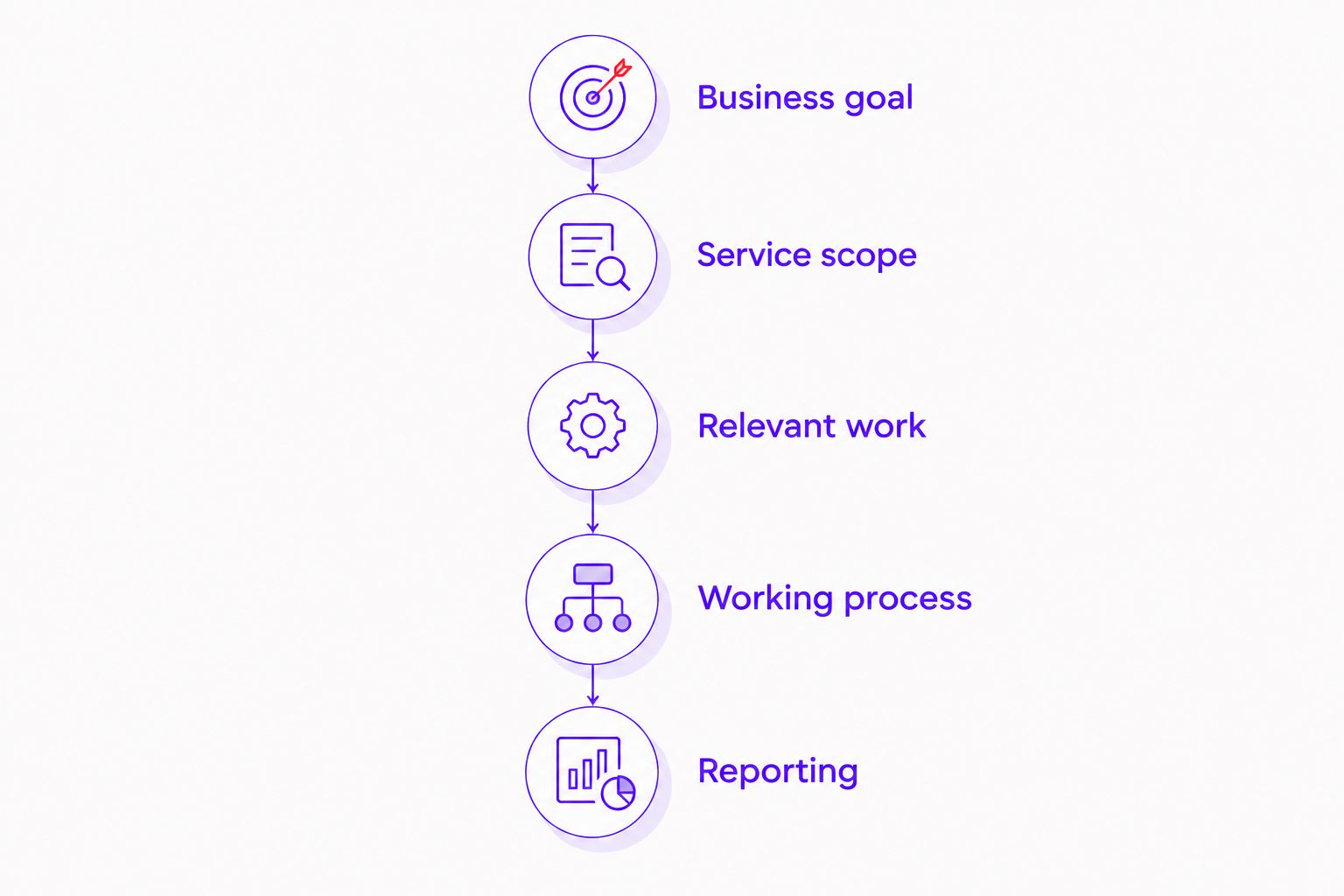
For your 2026 brief, use the following sequence. Each step should leave you with something concrete you can compare across proposals.
- Business goal: Define the action you want your audience to take. A product launch, a project enquiry and repeat engagement require different content priorities.
- Service scope: List the channels, content formats, publishing responsibilities and response duties included in the engagement.
- Relevant work: Ask for examples that show how the agency handles a comparable buyer, offer or communication challenge.
- Working process: Establish who supplies information, who approves content and who handles sensitive comments or customer issues.
- Reporting: Agree on the evidence you will review and how it will influence the next round of work.
Start with the business requirement, not the agency's package name. You can review CreativHeads as a service agency offering branding, web design, content and digital marketing; evaluate the proposed social media scope separately rather than assuming every service is included.
Why this matters
Your social media supplier becomes part of how customers experience your business. The work includes public messages, responses and routes into enquiries—not just a collection of graphics.
A polished content calendar is useful, but it does not resolve an unclear offer or a broken enquiry journey. For your 2026 plan, check where a person goes after seeing a post: a message conversation, a product page, a website form or another agreed destination.
Buy a defined responsibility, not an undefined promise of growth. You should know what the agency controls and what still depends on your sales team, product information and internal approvals.
Which service scope should you commission?
Social media production, ongoing management and a wider agency engagement are different buying decisions. Use this table to define the scope you need; these are proposal structures, not claims about any particular agency's packages.
| Scope | Best for | Benefit when included | Limitation to address |
|---|---|---|---|
| Content production | Brands with an internal publishing and response team | Gives your team agreed creative assets to publish | Does not cover scheduling, replies or reporting unless specified |
| Ongoing social management | Brands needing external ownership of routine channel work | Connects content planning, publishing and account activity within one scope | Can leave website changes, shoots and paid campaigns outside the engagement |
| Integrated agency engagement | Brands aligning their identity, website, content and marketing | Allows related work to share a brief and direction | Needs clear priorities and boundaries so separate projects do not blur together |
Content production: best for an existing internal team
Commission content production when you already have someone responsible for publishing, replies and performance review. Define the assets you need: static designs, captions, edited video or another agreed format.
The benefit is a focused creative brief. The limitation is that your business still owns the operating work, so a folder of finished assets should not be mistaken for a managed social presence.
Ongoing management: best for defined channel responsibility
Commission ongoing management when you need someone to own the agreed publishing workflow and account activity. Require explicit boundaries around comments, direct messages, customer complaints and escalation.
The benefit is clear day-to-day responsibility. The limitation is scope: product photography, original video shoots, advertising and website work need separate confirmation if they matter to the plan.
Integrated agency work: best for connected brand projects
Choose a wider engagement when social content depends on related changes to your identity, website or marketing. A shared brief gives those disciplines the same audience, offer and business goal.
CreativHeads is a fit for growing brands that want branding, web design, content and digital marketing from one agency. That service mix supports a connected brief; it does not mean every discipline belongs in your social media agreement.
The benefit is coordination across the work you commission. The trade-off is a broader approval process: decide which project takes priority and who can approve changes across the brand.
What should the proposal include?
A social media management proposal should make the work inspectable before you sign. Ask the agency to replace broad phrases such as ongoing support or regular content with named deliverables and responsibilities.
For a 2026 engagement, request these details in writing:
- Channels: Which accounts are covered, and why those channels suit your buyers.
- Content: Which formats are included, how assets are created and what your team must supply.
- Publishing: Who schedules posts, checks links and approves changes to the calendar.
- Community management: Which comments and messages receive responses, and which require your team's decision.
- Reporting: What is reported, where the information comes from and what decisions follow.
- Boundaries: What requires a separate project, additional approval or a revised scope.
Be specific about versions. A video edited for one channel is not automatically a complete set of assets for every placement, language or campaign.
Also clarify what happens when the plan changes. A delayed launch, missing product information or an urgent announcement needs an agreed process—not an argument about whether the request fits the original brief.
How do you assess an agency's work?
Ask the agency to explain an example, not just display it. You need to understand the brief, the audience, the agency's contribution and the reasoning behind the creative choices.
A relevant example does not have to come from an identical business. Look for a comparable challenge: explaining a technical product, creating confidence in a service or turning a launch message into useful content.
Ask these questions during the review:
- What did the client need the audience to understand or do?
- Which parts of this work did your team produce and manage?
- What information did the client supply?
- How did the content change after review or feedback?
- What evidence supports the result being described?
Treat attractive work and performance evidence as separate checks. A strong visual example demonstrates creative execution; it does not, by itself, establish that the work generated qualified enquiries.
If an agency presents results, ask for the period, the activity measured and the definition of the outcome. Keep unverified figures out of your own decision summary.
Why social media management scope varies
Two proposals can both say social media management while assigning very different amounts of work. Compare the responsibilities before comparing the commercial terms.
These factors change what you need to commission:
- Channel coverage: Different accounts require decisions about audience, format and publishing responsibility.
- Production requirements: Editing supplied footage is a different assignment from planning and producing original footage.
- Language requirements: Specify which languages need original writing, translation and approval for your buyers across India.
- Response responsibility: Routine comments, sales enquiries and complaints need different information and decision rights.
- Paid advertising: State whether campaign planning, creative, account management and reporting are included or separate.
- Connected projects: Identity changes, landing pages and website updates need their own deliverables when required.
Ask agencies to quote against the same brief. A proposal without video production cannot be judged as equivalent to one that includes it, even if both promise the same publishing frequency.
Avoid expanding the scope just because a service is offered. Commission the work your business can supply information for, approve and use.
What should a social media report tell you?
A report should help you decide what to continue, change or stop. It should connect the agreed goal with the content and account activity completed during the reporting period.
For your 2026 reporting brief, separate three questions:
- Delivery: Did the agreed work happen, and what changed from the plan?
- Audience response: Which messages and formats attracted relevant attention or interaction?
- Business response: What enquiries or next-step actions can your business identify, and what evidence connects them to social activity?
Do not label every message a lead. Agree on what makes an enquiry qualified: for example, whether the person is asking about a relevant service and gives enough information for your team to respond meaningfully.
Where website tracking or sales records are needed, assign responsibility for maintaining them. The report should explain the measurement method rather than treating a claimed result as self-evident.
If paid campaigns are part of the brief, use the guide to what a performance marketing agency should report each month to define that reporting scope separately.
Should social media management include paid advertising?
Paid advertising should be included only when you commission it explicitly. Publishing organic content and managing advertising are separate responsibilities, even when the same agency handles both.
Ask who owns campaign decisions, who approves creative and how advertising activity appears in reporting. Keep the campaign scope distinct so you can judge the work against its own goal.
Who should own the social accounts?
Your business should retain control of its social accounts and give the agency the access needed to do its work. Put the access arrangements and handover responsibilities in the agreement.
Confirm who can change permissions, how access is removed and what files or records you receive when the engagement ends. Do this before onboarding, not during a disagreement.
Can one agency handle branding and social media together?
One agency can handle both when those services are explicitly part of the engagement. The practical advantage is a shared direction for your identity, messages and content; the limitation is that each discipline still needs its own scope and approval.
CreativHeads offers branding, web design, content and digital marketing. Use that combination when your social brief genuinely depends on connected brand work, rather than commissioning unrelated services by default.
FAQ
What’s the first thing to ask a social media management agency?
Ask how the proposed work supports your business goal. Require the agency to explain the audience, intended action and deliverables before discussing a package.
How do I compare social media management proposals fairly?
Compare proposals against the same written scope. Check channels, content formats, production responsibilities, replies, reporting and exclusions so you are comparing equivalent work.
Do social media management services include video production?
Video production is included only when the proposal says so. Distinguish editing supplied footage from scripting, filming and creating different versions for agreed placements.
Should I choose an agency based on follower growth?
Follower growth alone is not a sufficient selection criterion. Ask how the agency will evaluate relevant audience response and the qualified enquiries your business wants.
Can CreativHeads help connect social content with other brand work?
CreativHeads offers branding, web design, content and digital marketing, making it relevant to a connected brand brief. Confirm the exact social media responsibilities and related deliverables in the proposal.
What should I check before giving an agency account access?
Confirm that your business retains account control and that agency permissions match the agreed work. Document access removal, approval authority and handover responsibilities.
What should my social media management agreement cover in 2026?
Your 2026 agreement should cover scope, approvals, reporting, account access and handover. It should also explain how additional work, sensitive responses and changes to the content plan are handled.
One last thing
Before signing, ask the agency to walk through a customer enquiry from the first message to the handoff to your team. Who replies, what information is collected, and who follows up?
If nobody owns the handoff, better content does not fix that gap. Make the enquiry process part of the agreement so the attention you commission has a clear next step.
Related guides
- How to compare performance marketing agency proposals
- Video production formats for product launches
- Can an ecommerce website developer also handle marketing?