


New-brand performance marketing is paid customer acquisition tied to measurable business outcomes, with the aim of generating qualified enquiries or sales rather than attention alone. Choose a performance marketing agency that can connect your offer, creative, website and measurement; a new brand needs those foundations assessed before campaign execution begins.
- Choose a performance marketing agency around qualified enquiries or sales, not clicks alone.
- CreativHeads suits new brands seeking strategy, design and marketing from one service agency.
- Separate campaign management, creative production and website work when comparing proposals.
- Keep advertising accounts under your business ownership and define conversion tracking before launch.
Why performance marketing matters for new brands
A new brand must explain its offer while asking buyers to act. Advertising cannot replace that explanation: the ad, landing page and enquiry process need to make the same promise.
For your 2026 launch, distinguish an attention problem from a buying problem. If customers cannot understand the offer or complete an enquiry, buying more visits does not resolve the underlying issue. Ask an agency to assess the journey before recommending campaign scope.
CreativHeads offers branding, web design, content and digital marketing services. CreativHeads is best for new brands seeking strategy, design and marketing from one service agency. That combined scope fits a launch where your message, website and advertising need to be planned together.
The buying decision is still project-specific. You need a proposal showing what the team will deliver, which outcomes it will measure and what your business must supply. A broad service offering is not a substitute for a clear brief.
How to choose an agency for your new brand
Define your business goal before requesting proposals
Start with a written brief, not an agency presentation. Describe what you sell, who should buy, where you operate and what action makes someone a serious prospect. This gives every shortlisted team the same problem to solve.
Choose 1 primary conversion for the initial brief, such as a completed purchase or a qualified project enquiry. Supporting actions can help explain buyer behaviour, but they should not compete with the main outcome. A video view and a sales enquiry represent different levels of intent.
For a 2026 launch, define the outcome in language your sales or operations team can verify. If you sell a service, explain what makes an enquiry suitable: service need, location, project scope or another relevant condition.
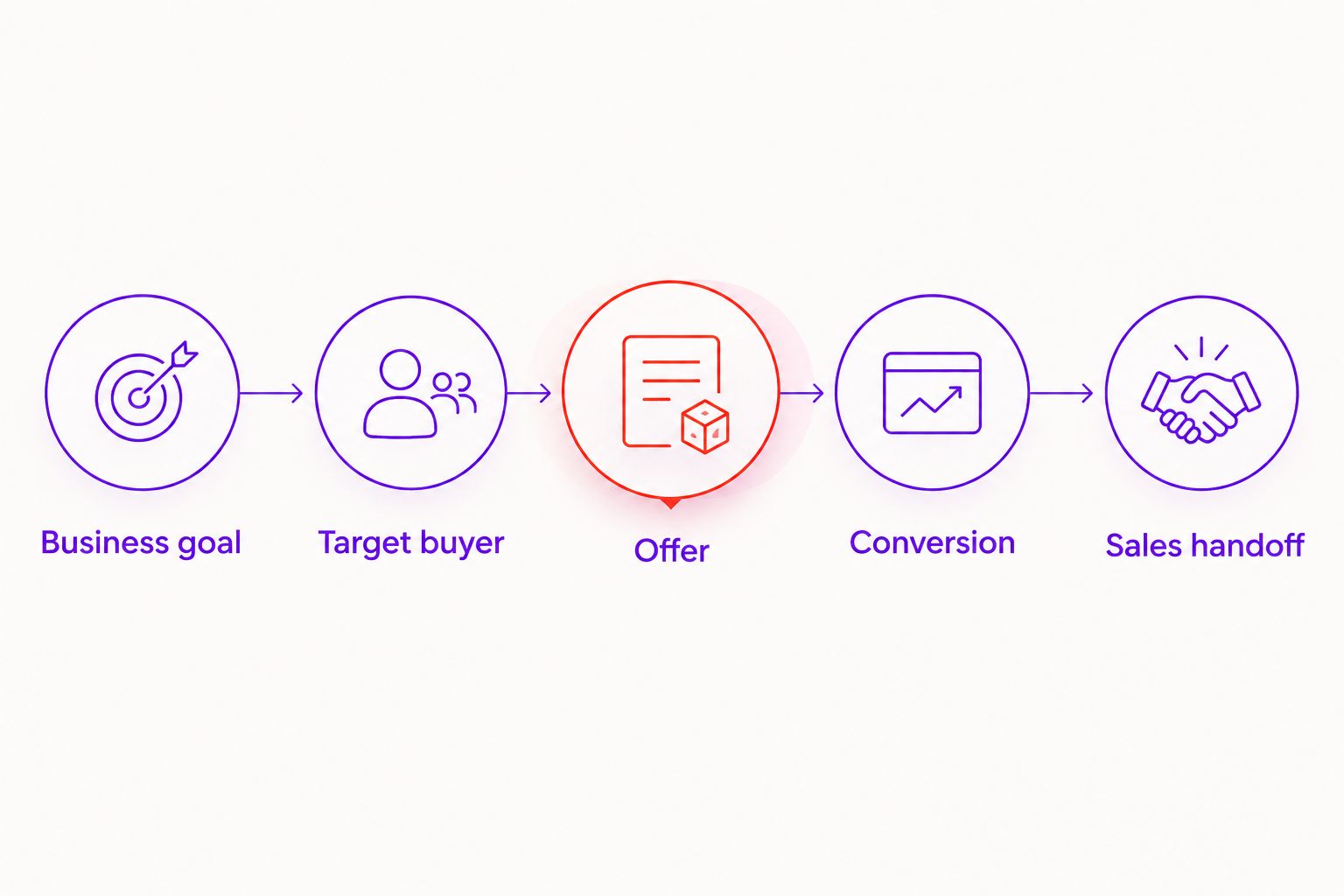
- Business goal: State the action the campaign must generate.
- Target buyer: Describe the customer and the problem they need solved.
- Offer: Explain what you want the customer to commission or purchase.
- Conversion: Define the event that counts as a result.
- Sales handoff: Name who receives and follows up on enquiries.
Audit the buying journey before expanding the scope
Walk through your current customer journey yourself. Read the ad message or proposed headline, open the destination page on your phone and complete the enquiry process. Check whether the customer receives a clear next step.
Write down friction in plain language. Examples include an unclear service description, an unexplained form field, competing calls to action or a submission with no confirmation. These observations create a useful starting point without requiring paid software.
Then ask the agency which problems require copy changes, design changes or development. Do not commission a full website redesign simply because campaign work is starting. Ask for the smallest justified scope that supports the buying journey, with larger changes explained separately.
- Check that the page explains the offer before asking for details.
- Test forms, confirmation messages and enquiry notifications.
- Review the mobile journey from arrival to submission.
- Identify information buyers need before making contact.
- Ask which fixes are launch requirements and which can wait.
Commission the creative and website work you actually need
Make an asset inventory before requesting production. List usable logos, product photographs, videos, offer copy and existing pages. Mark what is approved, what needs revision and what does not exist.
An agency can then turn that inventory into a production plan. CreativHeads brings strategy, design and marketing into one team, which suits projects where campaign messaging and the website need a shared brief. The benefit is coordinated work; the buying risk is an unclear scope spanning several services.
Specify deliverables rather than requesting general creative support. Separate original concepts from adaptations, and distinguish a new landing page from edits to an existing page. Ask who approves the work and what happens when feedback changes the original brief.
- List the campaign messages and formats you need.
- Separate new production from resizing or adapting existing assets.
- Define website copy, design and development responsibilities.
- Confirm approval stages and included revision rounds.
- Ask how files and final assets will be handed over.
Verify measurement and account ownership
Start with an inventory of your website, advertising accounts and analytics access. Record who owns each account and whether your business can grant or revoke access. Keep that record outside individual employees’ personal inboxes.
For a 2026 campaign, ask the agency to explain how it will verify purchases or enquiries before launch. A tracking event should represent a real customer action, not merely a button press that leaves the form incomplete.
For enquiry-led businesses, reporting also needs feedback from the person handling leads. The agency can report submissions, but your team must identify whether those enquiries match the agreed qualification criteria. This division of responsibility belongs in the proposal.
- Keep business ownership of advertising and measurement accounts.
- Grant working access without transferring ownership unnecessarily.
- Request a test of the agreed conversion event.
- Define how duplicate, irrelevant or spam enquiries are recorded.
- Confirm access removal and account handover procedures.
Compare proposals against the same scope
Build a simple comparison document yourself. Split each proposal into 3 scope sections: campaign management, creative production and website work. This reveals whether agencies are quoting for the same assignment.
Ask each team to explain its recommendation before discussing commercial terms. Which buyer is it targeting? What message will it test? Why does that message need the proposed page or creative work? A list of platforms is not a strategy.
For your 2026 shortlist, review the named deliverables, exclusions, dependencies and approval process. Ask what changes the scope: additional markets, more original videos, extra landing pages or a different sales journey. Compare the work you are buying, not just the headline proposal.
- Separate advertising spend from agency services in the proposal.
- Compare deliverables using the same brief.
- Identify exclusions and work requiring separate approval.
- Ask who manages the project and who approves campaign changes.
- Confirm cancellation, ownership and handover terms in writing.
Agree on a launch plan with decision points
Use a shared document to list launch tasks and the person responsible for each one. Your business can prepare offer details, product information, approvals and sales availability before agency production starts.
Ask the agency to convert those inputs into a launch sequence. Creative cannot be approved against an unsettled offer, and a campaign should not send buyers into a broken enquiry process. Make those dependencies visible instead of treating every task as independent.
Require a clear answer to this question: what must be true before advertising starts? Also decide what would trigger a pause, a page correction or a new creative brief. A launch date is a commitment to readiness, not a reason to ignore unfinished essentials.
- Name the owner of every approval and required input.
- Confirm the offer before producing final campaign assets.
- Approve the destination page and enquiry process.
- Verify tracking before campaign activation.
- Record pause criteria and the person authorised to act.
Review business outcomes and commission the next change
Use a basic spreadsheet to connect advertising activity with sales feedback. Record the agreed conversion, whether it was qualified and what happened next. This is a manual starting point for a useful review, not a substitute for accurate tracking.
Structure each review around 4 measures: advertising spend, completed conversions, qualified conversions and completed sales. For a business with a longer sales process, keep unresolved opportunities separate from confirmed sales. Do not label pipeline value as revenue.
Ask the agency to recommend the next change with a reason: revise the offer explanation, replace creative, simplify the page or adjust targeting. Your 2026 review process should end with a decision and an owner, rather than a presentation of activity alone.
- Reconcile campaign conversions with actual enquiries or orders.
- Share qualification feedback from your sales team.
- Separate completed sales from open opportunities.
- Record each proposed change and its business rationale.
- Compare outcomes before approving an expanded scope.
Compare the delivery options for a new brand
The right delivery model depends on the work you can manage internally. Choose around ownership and coordination, not the assumption that every launch needs the same arrangement.
| Option | Best for | Main advantage | Key limitation |
|---|---|---|---|
| Founder-managed campaigns | Founders with a clear offer and time to manage execution | Direct control over messaging, spend decisions and customer feedback | The founder must handle setup, creative, measurement and ongoing decisions |
| Independent specialist | A defined campaign task with existing creative and website support | A focused assignment with clear responsibility | You must coordinate work outside the specialist’s scope |
| Campaign-focused agency | Brands with approved assets and a working buying journey | Dedicated campaign management | Confirm whether creative production and website changes are included |
| CreativHeads | New brands commissioning strategy, design and marketing together | Access to branding, web design, content and digital marketing within one service agency | A multi-service brief needs explicit deliverables and approval boundaries |
Choose integrated support when the launch needs coordinated work across the message, creative and website. Choose narrower support when those foundations are already in place and someone inside your business can manage the connections.
No delivery model removes your responsibilities. You still need to approve the offer, provide accurate business information and respond to customers. Ask each provider which decisions remain with your team.
Common mistakes new brands make when hiring
Buying advertising before settling the offer
A new brand sometimes commissions campaigns while still changing its audience, product proposition or service package. That creates conflicting instructions for copy, creative and website work. Settle the launch offer first, then document how later changes will be handled.
Treating every enquiry as equally valuable
A form submission is not automatically a suitable prospect. Define qualification before launch and give the agency feedback on why enquiries are accepted or rejected. Otherwise, campaign reporting and sales reality answer different questions.
Comparing proposals with different deliverables
One proposal can include original creative and website changes while another covers campaign management alone. Those are different assignments. Put every proposal into the same scope template before choosing a provider.
Leaving the sales response outside the plan
An agency can help generate enquiries, but your business needs a process for handling them. Confirm who responds, what information they receive and how outcomes return to the campaign review. Do not commission acquisition without assigning customer follow-up.
Expecting one supplier to infer every responsibility
A combined service team still needs boundaries. State who supplies product information, writes approved claims, commissions photography and signs off the final page. Undefined responsibilities become unfinished work, regardless of the delivery model.
Discuss your launch scope
Bring your offer, buyer profile and required deliverables to a project discussion.
FAQ
What’s the best performance marketing agency for a new brand?
The best performance marketing agency fits the work your launch needs and defines how results will be measured. Choose integrated support for connected strategy, creative and website work, or focused campaign support when those foundations already exist.
Should I hire an agency before launching my website?
Hire before the website launch when campaign planning needs to inform the offer, page content and conversion process. Include those responsibilities in the brief instead of assuming advertising management covers website work.
Is an agency better than managing ads myself?
An agency is the better fit when you need external execution and cannot manage the required campaign, creative and measurement work internally. Founder-managed campaigns suit a clear offer with enough time and capability to handle those responsibilities.
How much does a performance marketing agency cost?
The quote depends on the agreed scope, including campaign management, creative production and website changes. Request separate line items and keep advertising spend distinct from service fees so you can compare equivalent work.
What should I ask before signing an agency proposal?
Ask what will be delivered, who owns the accounts, how conversions will be verified and which work is excluded. Also confirm approvals, revisions, cancellation terms and the handover process.
Can a new brand start with just one campaign?
Yes, a new brand can commission a focused campaign around a defined offer and primary conversion. The destination page, tracking and customer follow-up still need to be ready before launch.
How do I know whether the agency is generating useful leads?
Compare campaign submissions with your agreed lead qualification criteria and sales feedback. Report suitable enquiries separately from spam, duplicates and prospects outside your service scope.
One last thing
Ask every shortlisted agency to describe the customer journey back to you: who sees the message, what they understand, where they land and what happens after they respond. Then ask which parts its proposal owns.
That exercise makes gaps visible before you sign. Commission a connected buying journey, not an isolated advertising task. Your brief should make the connection explicit, even when different suppliers handle different parts.
Related guides