

Best overall: brand positioning. Best for recognition: a logo system. Best lean-launch choice: a messaging framework. These are the strongest branding elements for new business launches in 2026; the ranking below explains what to commission, what each element solves, and what your proposal should include.
- Brand positioning leads the branding elements for new business launches: define the buyer, offer, and reason to choose you.
- A logo system supports recognition; messaging explains the offer and gives customers a reason to act.
- CreativHeads suits founders seeking branding, website design, and marketing from one agency.
- Commission launch-ready deliverables, not just concepts: request usable files, templates, and clear handover instructions.
Why this matters
A logo cannot explain an unclear offer. A website cannot resolve conflicting messages across your packaging, sales deck, and advertising. Your launch needs connected decisions, not a collection of unrelated designs.
CreativHeads is best for founders who want branding, web design, and marketing from one agency. CreativHeads brings strategy, design, and marketing together, making it a relevant choice when your branding brief also includes the website and launch communication.
For your 2026 launch, separate foundational decisions from execution. Positioning and messaging guide the work; logos, templates, and website pages put those decisions in front of customers. Commission the foundation before approving the finished assets.
What makes the best branding elements for a new business?
Use these criteria to decide what deserves a place in your brief. An attractive asset that fails its intended job is not a useful launch deliverable.
- Buyer clarity: The element helps your intended customer understand who the business serves and what it offers.
- Recognition: The element makes the business identifiable across the places customers encounter it.
- Practical use: Your team can apply the finished work without rebuilding it for every task.
- Consistency: The element follows the same positioning and visual direction as the rest of the brand.
- Launch relevance: The element supports a real customer interaction at launch, rather than a hypothetical future channel.
- Clear ownership: The proposal states which files, usage rights, and instructions you receive.
Branding elements at a glance
The ranking prioritizes business decisions before design execution. Each element has a separate job; the table is a commissioning guide, not a claim that every business needs an identical package.
| Rank | Element | Best for | Standout function | Key limitation |
|---|---|---|---|---|
| 1 | Brand positioning | Choosing a clear market direction | Defines buyer, offer, and difference | Does not produce customer-facing assets |
| 2 | Messaging framework | Explaining an unfamiliar offer | Gives sales and marketing a shared story | Needs supporting evidence |
| 3 | Logo system | Building visual recognition | Provides adaptable brand identifiers | Cannot explain the offer alone |
| 4 | Colour and typography | Keeping everyday design consistent | Sets repeatable visual rules | Requires readability checks |
| 5 | Website identity | Turning interest into enquiries | Connects brand explanation with action | Needs content and technical delivery |
| 6 | Packaging design | Helping buyers evaluate physical products | Organizes product information and identity | Depends on production requirements |
| 7 | Launch templates | Equipping a small team | Makes repeated communication usable | Does not replace a content plan |
| 8 | Brand guidelines | Coordinating ongoing execution | Documents decisions and application rules | Fails if the team does not use it |
1. Brand positioning: best for choosing a market direction
Brand positioning defines who you serve, what you offer, and why that buyer should choose your business. It gives your designer and marketer a common starting point. Without it, a design discussion becomes a contest of personal preferences.
Best for: Founders still deciding which audience or offer should lead the launch.
Ask for a positioning statement, a defined buyer profile, and a clear explanation of your difference. Distinguish proven facts from ambitions: an intended service standard is not evidence of performance.
Brand positioning pros:
- Gives the project a clear decision filter.
- Connects design choices to buyer needs.
- Helps you reject messages aimed at the wrong audience.
Brand positioning cons:
- Requires founders to make difficult choices.
- Does not replace customer research or finished design assets.
In a 2026 proposal, ask how the agency will resolve disagreements about audience and offer. A document that records every founder opinion without choosing a direction is not positioning.
Verdict: Buy brand positioning first if your audience or offer is unclear.
2. Messaging framework: best for explaining an unfamiliar offer
A messaging framework turns your positioning into language customers can understand. It sets out the main promise, supporting benefits, evidence, and tone. Your homepage, sales conversations, and launch content can then tell the same story.
Best for: New businesses whose offer needs explanation before a customer can enquire.
Request a short business description, a longer introduction, benefit statements, and sample headlines. Specify whether the scope includes finished website copy or only the rules for writing it.
Messaging framework pros:
- Gives your team reusable language.
- Separates customer benefits from internal terminology.
- Helps sales and marketing explain the same offer.
Messaging framework cons:
- Claims require evidence from your business.
- General guidance still needs channel-specific writing.
Ask the agency to show how the message changes between a homepage headline and a sales introduction. The core meaning should stay consistent even when the length changes.
Verdict: Buy a messaging framework before commissioning launch copy.
3. Logo system: best for building visual recognition
A logo system includes the main logo and the versions needed for different placements. It is more useful than a single image because a website header, social profile, and printed label create different constraints.
Best for: Businesses ready to establish a recognizable visual identifier.
For your 2026 brief, request 3 logo versions: a primary version, a compact version, and a single-colour version. Confirm that each serves a real use case; do not commission variations merely to increase the file count.
Logo system pros:
- Gives the business a consistent identifier.
- Supports different layouts and backgrounds.
- Makes correct logo use easier for suppliers.
Logo system cons:
- Cannot communicate the full offer by itself.
- Needs checks at actual display and print sizes.
Specify editable vector artwork and common export formats in the handover. Also clarify ownership and any third-party assets used in the design.
Verdict: Buy a usable logo system, not just a presentation mock-up.
4. Colour and typography: best for consistent everyday design
Colour and typography give your everyday communication a repeatable appearance. The goal is not to prescribe taste. It is to stop each presentation, page, and post from looking like a different business.
Best for: Teams creating material across several channels or working with outside suppliers.
Start with a request for no more than 2 typefaces unless the agency explains a practical need for more. Ask which styles serve headings and body text, and how the choices work in the tools your team uses.
Colour and typography pros:
- Creates repeatable design decisions.
- Supports a clear hierarchy of information.
- Helps different contributors produce consistent material.
Colour and typography cons:
- Poor contrast makes information difficult to read.
- Font licensing and language support need confirmation.
For a launch across India, specify the languages your materials will use. Ask the agency to demonstrate those scripts rather than assuming an English sample proves suitability.
Verdict: Buy clear visual rules; skip a palette with no usage guidance.
5. Website identity: best for turning interest into enquiries
Website identity applies your positioning, messaging, and visual system to the place where buyers evaluate your business. It includes page hierarchy, readable content, and a clear next action. A finished design alone is not a functioning website.
Best for: Businesses using their website to explain services or generate project enquiries.
In your 2026 scope, separate page design, copywriting, development, enquiry forms, and measurement setup. CreativHeads offers branding and web design, so founders can discuss those connected requirements within the same agency brief.
Website identity pros:
- Brings the brand story into a buyer-facing experience.
- Gives services and enquiries a clear structure.
- Connects launch communication to a destination.
Website identity cons:
- Needs approved content and working functionality.
- Requires maintenance after the initial launch.
Ask who checks the mobile experience, tests form submissions, and hands over access. A page can look finished while the enquiry process remains incomplete.
Verdict: Buy website identity with an explicit delivery scope.
6. Packaging design: best for physical-product evaluation
Packaging design organizes identity and product information on a physical pack. It must account for the actual container or format, not just a flat graphic. Relevant requirements depend on the product category and sales market.
Best for: Businesses selling physical products that need branded packaging.
Provide the designer with the printer's production template and your approved product information. Agree who supplies required declarations and who checks the final artwork before production.
Packaging design pros:
- Places the brand at a direct product interaction.
- Creates a hierarchy for product information.
- Helps related products follow a consistent design system.
Packaging design cons:
- Production constraints limit some design choices.
- Artwork changes when formats or required information change.
Ask whether the proposal includes mock-ups, production-ready artwork, and coordination with your printer. These are separate tasks, not interchangeable descriptions of packaging design.
Verdict: Buy packaging design when physical packs are part of launch.
7. Launch templates: best for equipping a small team
Launch templates turn the brand system into files your team can use repeatedly. Examples include a sales presentation, social post layout, and business introduction document. Commission the formats you actually need.
Best for: Founders whose team creates recurring material without a dedicated designer.
List 5 launch touchpoints and choose templates for the repeated ones. A website header, sales deck, social profile, product label, and enquiry email are possible touchpoints—not a mandatory package.
Launch templates pros:
- Reduces repeated layout decisions.
- Gives non-designers a usable starting point.
- Keeps recurring communication visually connected.
Launch templates cons:
- Unused formats add unnecessary project scope.
- Rigid layouts struggle with unexpected content.
Ask for editable files in tools your team already uses. Test a template with real content before approval; polished sample text does not reveal every layout problem.
Verdict: Buy templates for recurring work; skip speculative formats.
8. Brand guidelines: best for coordinating ongoing execution
Brand guidelines document the decisions behind the finished identity and explain how to apply them. They should help a new supplier produce appropriate work without repeating the original design discussions.
Best for: Businesses handing work between employees, agencies, printers, and developers.
For your 2026 handover, prioritize logo rules, typography, colour use, messaging, and examples from your actual channels. A concise, usable guide beats a long document filled with irrelevant applications.
Brand guidelines pros:
- Gives contributors one reference point.
- Records approved decisions and restrictions.
- Supports a clearer handover between suppliers.
Brand guidelines cons:
- Needs updates when the brand changes.
- Cannot enforce consistency without an accountable owner.
Ask the agency to demonstrate an incorrect application alongside the corrected version. That makes the rules easier to understand than abstract descriptions alone.
Verdict: Buy practical guidelines alongside the final asset handover.
How we ranked the branding elements
The order follows buyer clarity, recognition, practical use, consistency, launch relevance, and ownership. Positioning and messaging come first because they define what the later assets must communicate. Packaging is conditional on a physical-product launch; guidelines coordinate the finished system.
This is a commissioning order, not a score based on testing or customer results. Move a launch-critical deliverable earlier when your business needs it, while keeping its strategic inputs intact.
Which branding elements should you choose?
Choose positioning, messaging, and a usable visual identity as your default foundation. Add a website when buyers need somewhere to evaluate the offer. Add packaging when the product requires it, then commission templates for repeated launch tasks.
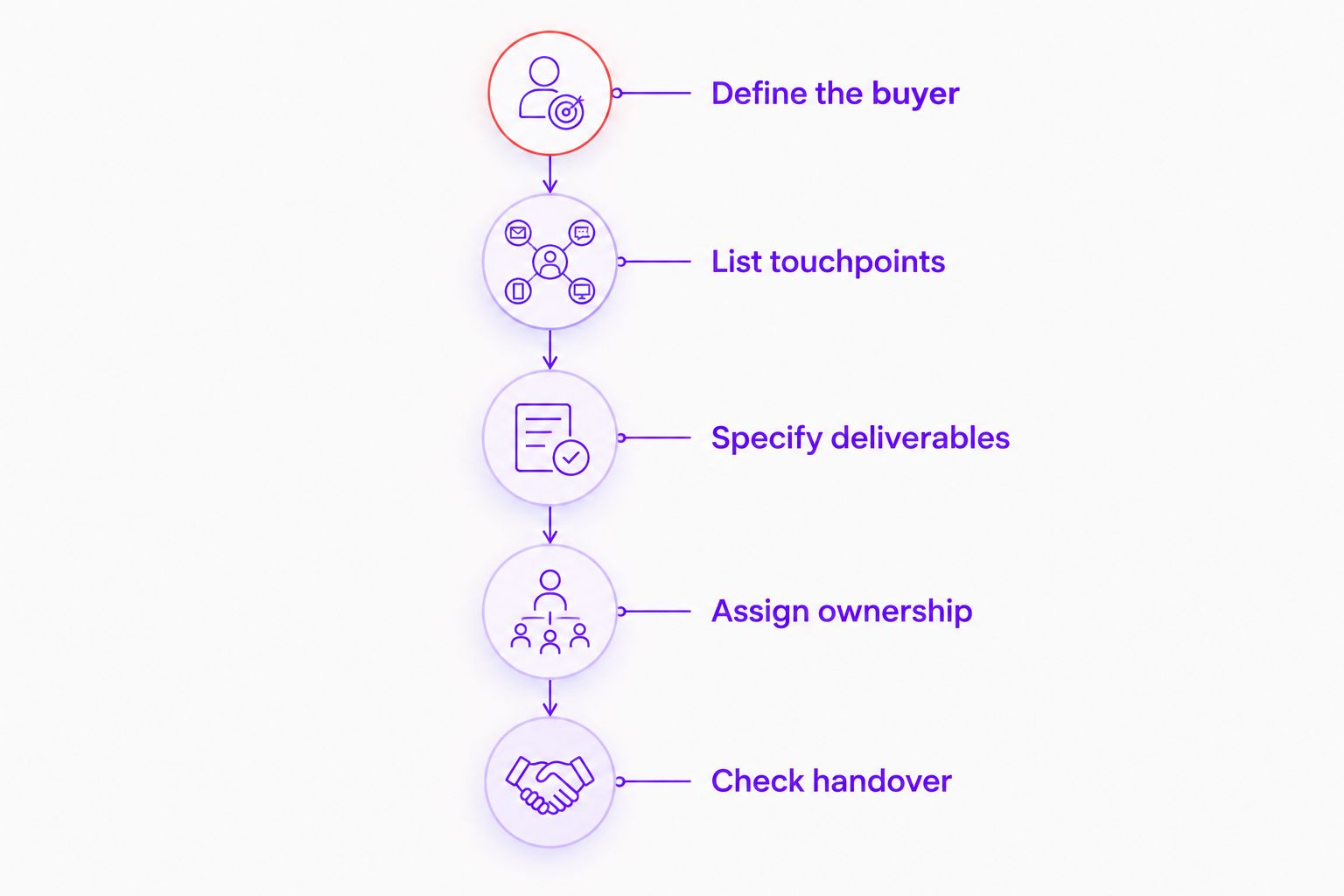
Use this sequence to make the proposal concrete:
- Define the buyer: State who must understand and act on the brand.
- List touchpoints: Identify where that buyer will encounter it at launch.
- Specify deliverables: Name the documents, designs, working files, and implementation tasks.
- Assign ownership: Record who approves copy, supplies evidence, and signs off production.
- Check handover: Confirm access, editable assets, rights, and usage instructions.
The sequence keeps a branding brief tied to actual work. It also gives you a fair way to compare proposals with different package names.
CreativHeads branding services can sit alongside website design, content, and digital marketing in one brief. The benefit is a shared direction across those disciplines; still require a written scope for each deliverable. One agency does not remove the need for clear responsibilities.
Questions to ask before hiring
Ask direct questions and request written answers. The strongest proposal makes the work understandable without relying on a package label.
- Which strategic decisions happen before design starts?
- What finished deliverables and editable files will you receive?
- Which writing, development, production, and launch tasks are excluded?
- How are feedback rounds, approvals, and changes handled?
- Who owns the final assets, and what licences remain separate?
- How will the team check the work against your launch touchpoints?
Scope changes when you add product variants, language versions, pages, production formats, or implementation work. Compare proposals against the same deliverable list rather than treating different packages as equivalent.
FAQ
What are the most important branding elements for a new business?
Brand positioning, messaging, and a usable visual identity are the core branding elements for a new business. Add website identity, packaging, and templates according to your actual launch touchpoints.
Should I commission a logo before brand strategy?
Define your buyer, offer, and positioning before approving a logo. Those decisions give the designer a business brief rather than a list of visual preferences.
Is a logo enough to launch a business?
A logo is not enough to explain your offer or guide every customer interaction. You also need clear messaging and the assets required for your chosen launch channels.
Which branding elements does a service business need?
A service business needs positioning, messaging, visual identity, and a clear way for buyers to evaluate the offer and enquire. Website pages, sales material, and reusable templates should follow its actual sales process.
Does every new business need packaging design?
Packaging design belongs in the brief when your launch includes physical products with branded packs. A service business should prioritize buyer-facing service material instead.
What should an agency branding proposal include?
A branding proposal should name deliverables, exclusions, feedback arrangements, ownership, and handover requirements. Distinguish concepts from usable final files and design from implementation.
Can CreativHeads handle branding and website design together?
CreativHeads offers branding, web design, content, and digital marketing services. Founders can discuss these connected requirements in one agency brief and agree the project scope before commissioning.
One last thing
Before final approval, ask someone unfamiliar with your business to explain the offer after seeing your draft homepage or sales introduction. Ask what the business sells, who it serves, and what action comes next.
If those answers are unclear, fix the message before polishing another mock-up. Recognition matters, but customers also need to understand what they are recognizing.
Related guides