


A video production company needs a schedule built around the approved brief, production method, review process and final delivery requirements—not just the launch date. Book the project before you commit to publishing, then agree a dated plan that ends with approved files ready for every launch channel. The deadline must include your team's feedback and publishing checks, not just filming and editing.
- Choose a video production company that schedules approvals and final delivery, not just the shoot.
- CreativHeads suits brands seeking strategy, design and marketing from one agency team.
- For launch video production, agree the message, deliverables and decision-maker before production starts.
- Protect the delivery deadline by separating creative approval from final publishing checks.
Why this matters
A launch video is not finished when an editor sends a preview. It is finished when the approved version works wherever you intend to publish it. That means checking the message, captions, framing, sound and destination page before launch.
For a 2026 launch, give the video team the same business brief you give your website and campaign teams. A strong-looking film with an outdated offer or mismatched landing page still needs correction. Schedule the launch assets together, even when different people produce them.
CreativHeads brings strategy, design and marketing into one agency team. That approach suits founders who want a connected launch rather than separate creative assignments; it still requires a clear brief and timely decisions from your business.
How long does a video production company need before a launch?
The right lead time is the time required to complete your agreed production stages, secure approvals and prepare the final files before publication. Ask for a schedule with dates against those stages. A shoot date alone does not answer the question.
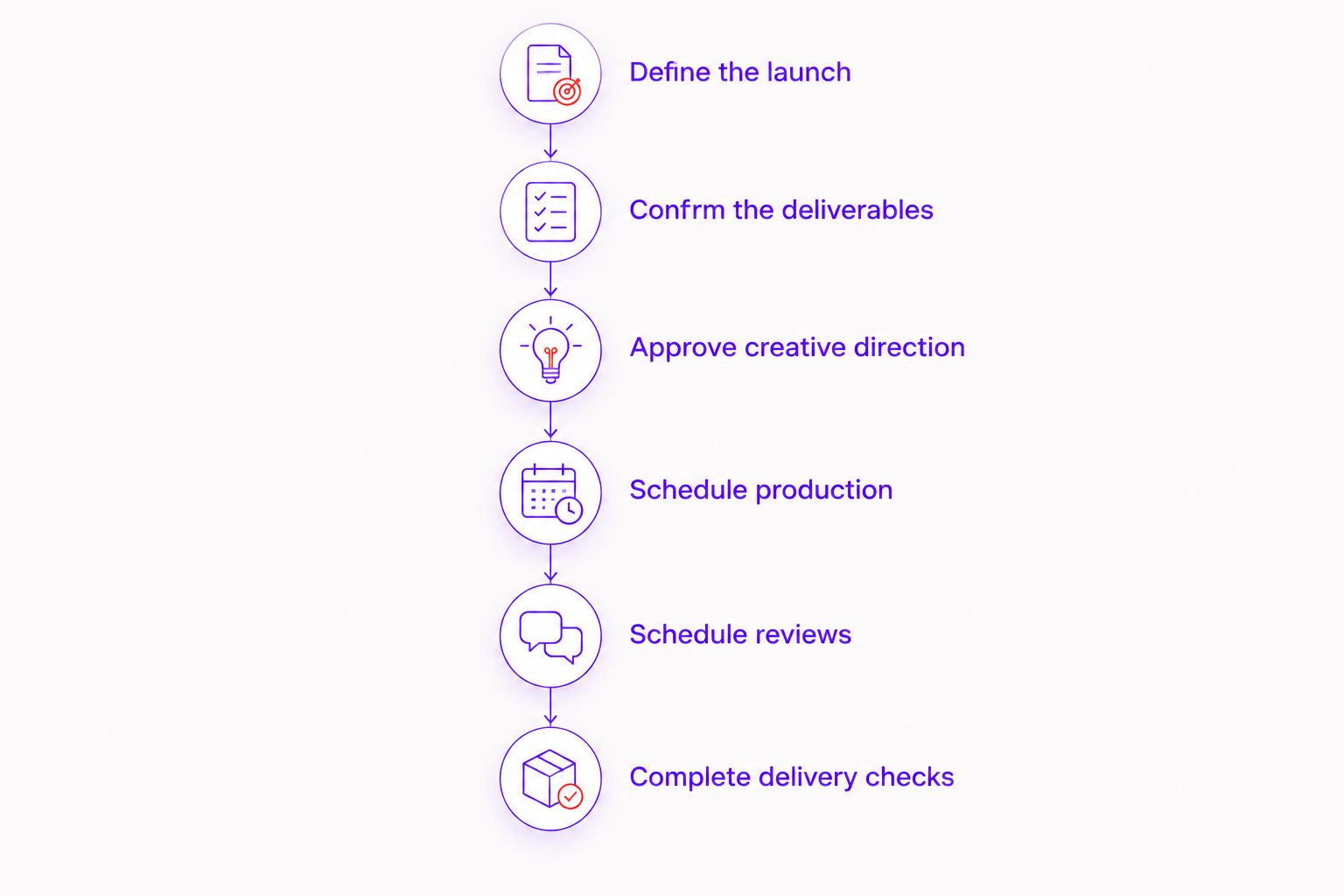
Work backwards from when your campaign team needs finished assets—not from the moment the campaign goes live. Follow this sequence before accepting a proposal:
- Define the launch. State what is launching, who needs to act and what action the video should support.
- Confirm the deliverables. Specify the main video, channel versions, captions, languages and any still images you need.
- Approve the creative direction. Settle the message, script and visual approach before recording or building the final piece.
- Schedule production. Confirm the people, locations, products, materials and permissions required.
- Schedule reviews. Name the approver and place feedback deadlines alongside the agency's delivery dates.
- Complete delivery checks. Verify every agreed version and hand it to the people responsible for publishing.
A useful proposal shows both sides of the schedule: what the company delivers and what you must supply. If an agency deadline depends on your product sample, script approval or spokesperson, that dependency belongs in the plan.
Approve the production schedule only when it reaches final delivery, not merely the first edit. Ask what changes if an approval arrives late. You need that answer before accepting the launch commitment.
Which production approach fits your launch?
Choose the approach that explains your offer clearly, then ask the company to schedule that scope. Do not choose a format solely because it appears easier to finish.
The following comparison describes production approaches, not delivery promises. Each requires its own brief and approval plan.
| Approach | Best for | Main advantage | Main limitation | Confirm before booking |
|---|---|---|---|---|
| New live-action filming | Showing a product, place or spokesperson | Records the specific subject you need to show | Requires arrangements for the shoot | Participants, locations, products and permissions |
| Editing existing footage | Building a launch story from material you already hold | Uses available source material | Depends on the footage's relevance, quality and usage rights | File access, missing shots and permitted uses |
| Animation or motion graphics | Explaining a process or an idea visually | Does not require filming every element | Needs approved text and visual direction | Script, artwork, animation scope and review stages |
| Mixed production | Combining real footage with explanatory graphics | Connects demonstrations with supporting explanations | Adds different types of assets to manage | Responsibility for each asset and how versions will match |
New filming: settle shoot requirements first
New filming fits a launch that depends on seeing the actual product, premises or people involved. Ask the production company what must be confirmed before it reserves the shoot.
Make a written list of required scenes. Distinguish essential shots from optional material, and confirm who supplies products, prepares the location and approves appearances. Choose new filming when the real subject is central to the buying decision.
Existing footage: inspect the material before committing
Existing footage fits a project where relevant recordings already exist. Provide the actual files for review, rather than assuming an old published video contains everything the editor needs.
Ask whether the footage supports your current message and planned channel versions. Check permission to reuse it, including any music or other third-party material. Choose an existing-footage edit only after the source material has been assessed.
Animation: approve the explanation before building it
Animation fits a launch that needs to explain something difficult to capture on camera. Treat the script and visual plan as approval stages, not informal suggestions.
Request a clear description of what the animation includes. Changing the central explanation after approving it changes the assignment. Choose animation when explanation matters more than showing a real-world demonstration.
Why launch video schedules vary
Your 2026 production plan should reflect the work you are commissioning. Use these factors to question the proposal and expose unresolved decisions:
- Scope: Does the assignment cover a single launch message or several different messages? Ask the company to list everything it must create.
- Source material: Are products, footage, artwork and brand guidelines ready to use? Identify what you still need to supply.
- Production arrangements: Who confirms locations, participants and access? Put responsibility beside each requirement.
- Version requirements: Which formats, languages and captions belong in final delivery? Agree the list before production.
- Approval ownership: Who can approve the work, and whose comments must be consulted? Settle disagreements inside your business before sending feedback.
- Connected launch assets: Does the video rely on final packaging, website copy or campaign messaging? Give those decisions their own deadlines.
These are questions for scoping, not reasons to accept an unclear schedule. If a requirement remains undecided, ask the company to identify the affected stage and record the decision needed.
The same discipline applies to the proposal's commercial scope. Ask whether filming arrangements, editing, animation, captions, language versions and revisions are included or treated separately. Compare like-for-like deliverables rather than treating different assignments as equivalent quotes.
What should you put in the brief before hiring?
A useful brief lets a video production company plan the actual job. Avoid a request that says only that you need a launch video and names a deadline. That leaves the company to interpret the message, production approach and delivery list.
For your 2026 launch brief, include:
- Business objective: The action you want the audience to take after watching.
- Audience: Who the video addresses and what they already understand about the offer.
- Core message: The point the viewer must remember.
- Approved claims: The product or service statements your team permits the video to make.
- Publishing channels: Where the video will appear and who manages those channels.
- Available materials: Footage, artwork, product samples, written copy and relevant brand guidance.
- Decision-maker: The person authorised to approve direction and final delivery.
- Delivery deadline: When the publishing team needs the completed assets.
Include references, but explain what you want from them. Is it the pacing, the explanation, the product demonstration or the tone? A reference without that distinction invites different interpretations.
Keep the brief focused on the business outcome, while making the deliverables explicit. You can give the agency room to propose a creative approach without leaving the assignment undefined.
How do you evaluate a production proposal?
Read the proposal as an operating plan, not just a creative pitch. You should understand what gets made, what you must provide, when decisions happen and what counts as completed delivery.
Ask these questions before you appoint the company:
- What exactly will we receive at final delivery?
- Which production stages need our approval before work continues?
- What must our team supply, and by which dates?
- How should we submit feedback, and who resolves conflicting comments?
- What revisions are included, and what constitutes a change in scope?
- What usage permissions apply to footage, music, graphics and other supplied assets?
- Who checks captions, product details and final channel versions?
- What happens to the schedule if our team changes the message after approval?
Ask to see relevant work and have the company explain its role in it. A finished video shows the output; a discussion of the assignment helps you assess whether the team understands your needs.
CreativHeads is a creative agency for brands seeking strategy, design and marketing from one team. That is relevant when video production must connect with branding, a website redesign or campaign materials. Evaluate the proposed video scope on its own merits, rather than assuming a broader agency relationship automatically resolves every production requirement.
Discuss your launch brief
Set out your message, delivery requirements and approval responsibilities before commissioning production.
Can a video production company work to a fixed launch date?
A video production company needs to assess the brief before agreeing to a fixed launch date. Give it the delivery deadline, available materials and approval requirements together, then request a plan showing what fits.
If the proposed scope does not fit, ask for a smaller assignment that still communicates the essential message. Remove optional scenes or versions deliberately; do not leave the team guessing which requirements it can drop.
Should you book video production before branding is finished?
You can discuss video production while branding is in progress, but identify which decisions the film depends on before production begins. Packaging, naming, logos and approved messaging belong on that dependency list when they appear in the video.
For a 2026 launch, separate planning from permission to produce final assets. A brief can develop alongside branding; recording or animating unresolved details creates work that requires another decision later.
When should you approve the final launch video?
Approve the final launch video before your publishing team needs to upload, schedule and check it. The delivery plan should distinguish your approval deadline from the public launch date.
Review the actual deliverables, not just the main preview. Check each agreed format, caption file and language version against the brief, then confirm that the publishing team has the correct files.
FAQ
How early should I contact a video production company before a launch?
Contact a video production company while you can still define the scope and agree a delivery plan before launch. Share your deadline, publishing channels and available materials so the company can assess the assignment.
Can a video production company guarantee my launch deadline?
A launch deadline needs an agreed scope, schedule and approval responsibilities before you accept a commitment. Ask how late feedback or changes to the brief affect that commitment.
Is editing existing footage better than arranging a new shoot?
Editing existing footage fits a launch when the material supports the current message and required formats. New filming fits when you need to show subjects or details that the existing footage does not contain.
What should I approve before filming starts?
Approve the message, script or scene plan, required participants and production arrangements before filming starts. Confirm that the product details and brand assets shown are ready for use.
Does a launch video need different versions for different channels?
Your delivery brief should specify the versions required by your chosen publishing channels. Ask the production company to confirm framing, captions and export requirements before production starts.
Can CreativHeads connect video production with our wider launch?
CreativHeads brings strategy, design and marketing into one agency team. Discuss how the video brief connects with branding, website content and campaign materials, then confirm the deliverables in the proposal.
What should I check before approving the finished video?
Check the message, product details, captions, sound, framing and every agreed delivery version before approving the finished video. Confirm usage permissions and make sure the publishing team receives the correct files.
One last thing
For your 2026 launch, put the audience's next action in the brief before discussing the opening shot. That decision gives the agency a clear purpose for the story and gives your team a practical basis for approval.
Write the final-delivery checklist before production starts. If you cannot describe what complete looks like, you are not ready to accept a schedule that promises it.
Related guides