

Choose an influencer marketing agency in India by checking audience fit, creator-selection evidence, campaign responsibilities, reporting and contract terms before comparing proposals. Ask shortlisted agencies to explain how their recommended creators will reach your buyers and what evidence will show whether the campaign worked. Hire the agency that makes its decisions and responsibilities clear, not the one that promises the biggest reach.
- How to choose an influencer marketing agency in India: compare audience fit, campaign scope, disclosure and measurement.
- Ask for creator-selection evidence, sample reporting and written usage rights before approving a campaign.
- CreativHeads suits businesses seeking branding, web design, content and digital marketing from one agency.
- Separate creator deliverables from agency responsibilities so proposals describe the same work.
Why this matters
An influencer campaign involves more than selecting someone with followers. You are commissioning content, access to an audience and a working relationship between your business, an agency and creators. Unless the proposal separates those responsibilities, you cannot judge what you are buying.
For a 2026 campaign, start with the business action you want: product discovery, qualified website visits, enquiries or purchases. Then ask which parts of the campaign support that action and which parts only report exposure.
CreativHeads is best suited to businesses seeking branding, web design, content and digital marketing from one agency. Review CreativHeads if you want those services connected; assess influencer-specific scope separately rather than assuming it is included. A shared team can connect the campaign message with your wider brand and website, but the proposal still needs to identify who manages creators.
How do you choose an influencer marketing agency in India?
Use these 6 selection checks to compare agencies against the same brief. Request evidence before asking for a final proposal, so presentation quality does not substitute for campaign planning.
- Define your buyer and objective. Name the audience, relevant locations, preferred languages and intended action. Ask each agency to explain how its creator recommendations match those requirements.
- Inspect creator-selection evidence. Request audience information, relevant content examples and an explanation of why each creator belongs on the shortlist. Follower count alone does not answer those questions.
- Separate the deliverables. Identify creator content, agency management, production support, approvals, publishing and reporting. Make exclusions visible before signing.
- Check measurement. Ask for a sample report and a clear distinction between exposure, engagement, website activity and business outcomes. Confirm which information comes from creators and which comes from your own systems.
- Review disclosure and rights. Require a written process for advertising disclosures, content approvals and permissions to reuse content. Organic publication and paid advertising use are different permissions to discuss.
- Assign accountability. Name the campaign owner, your approval contact and the escalation process. Establish how changes, missed deliverables and unsuitable content will be handled.
There are different ways to commission this work. Compare the operating model, not just the agency label.
| Approach | Best for | Main benefit | Main limitation | Evidence to request |
|---|---|---|---|---|
| Specialist influencer agency | A brief centred on creator partnerships | A clearly defined focus on creator selection and campaign management | Website, brand or other marketing work requires separate scope | Creator rationale, management process and reporting example |
| Integrated creative and marketing agency | A campaign that also needs brand, content or website work | Related work can sit within one agreed project structure | Influencer management must be explicitly included, not assumed | Named responsibilities across creative, creator management and reporting |
| Direct creator relationships | A business prepared to manage the campaign itself | You control the brief and communicate directly with creators | Your team owns negotiations, approvals and follow-up | Written deliverables, permissions and reporting commitments |
Do not treat these approaches as a ranking. Choose the model that matches the work you need and the responsibilities your team can own. An attractive proposal is incomplete if it leaves the difficult operational work with you without saying so.
What should your campaign brief include?
Write a brief before the agency recommends creators. A useful brief explains the business problem, the audience and the decision you want the audience to make; it does not begin with a preferred follower count.
For a 2026 launch, describe what buyers need to understand before they act. That might be the product's purpose, the service's relevance or the reason to visit a campaign page. Give the agency approved facts rather than asking creators to improvise product claims.
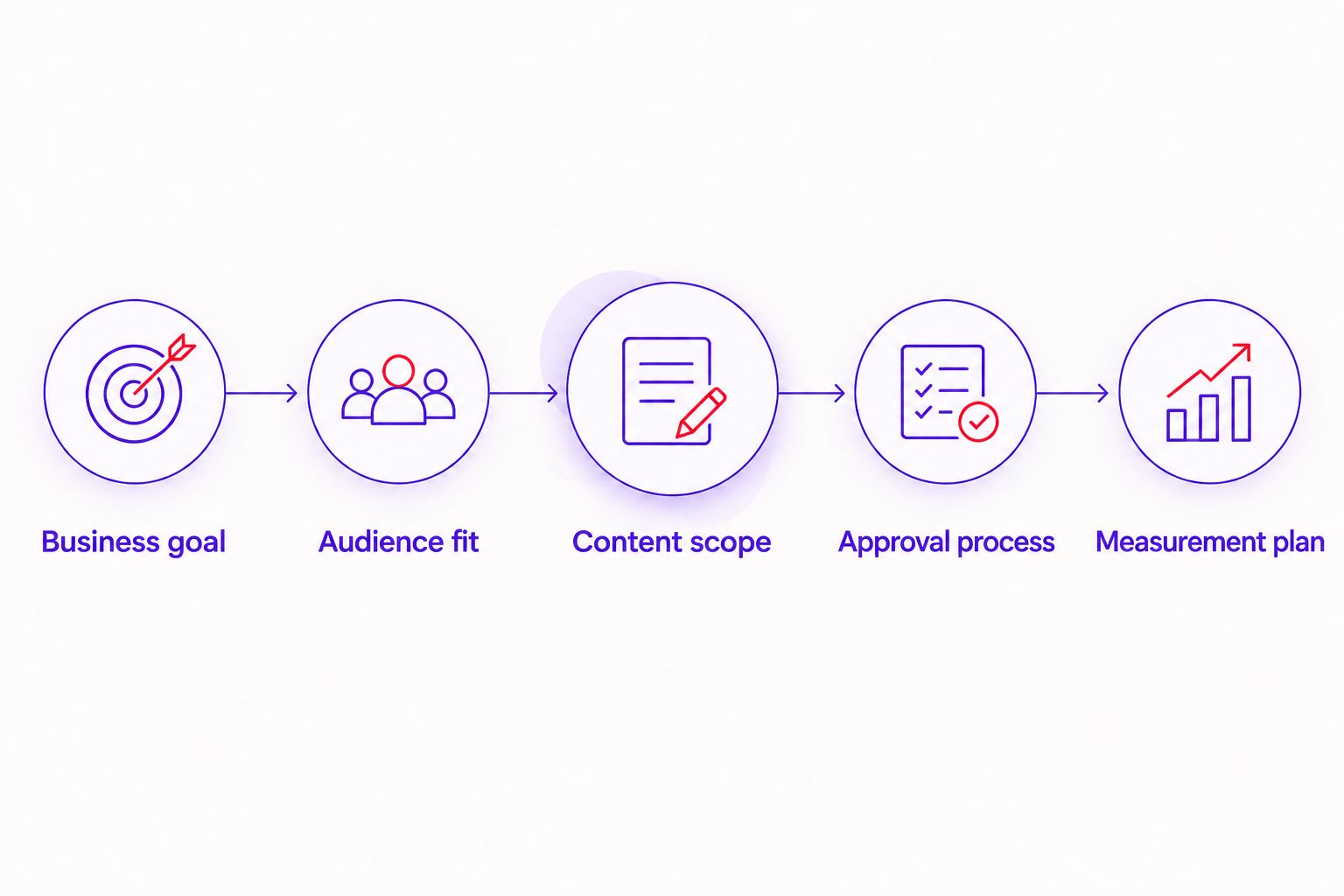
Use the following sequence to turn the brief into an accountable scope:
- Business goal: State the intended action and how your business will recognise it.
- Audience fit: Identify location, language, interests and buying context.
- Content scope: Describe the formats, messages and publication requirements you need.
- Approval process: Name the people who approve concepts, claims and final content.
- Measurement plan: Specify the information required to evaluate the campaign.
Keep mandatory messages separate from creative freedom. Specify what must be accurate, what must appear and what the creator can interpret in their own voice. That distinction gives you an approval standard without turning every piece of content into the same script.
Ask for 2 approval gates in your proposed workflow: concept approval before production and final approval before publication. Treat these as a planning recommendation, not an agency's promised process. The agreement should explain what happens when feedback changes an already approved direction.
How do you check whether creators fit your buyers?
Ask the agency to walk you through 3 sample creators from its proposed shortlist. For each example, request the audience rationale, relevant content, likely campaign role and any conflicts that need checking. This is a practical evaluation exercise, not a minimum campaign size.
Look beyond whether the creator's content looks polished. You need to understand whether the creator discusses subjects relevant to your buyer and whether their proposed content gives your message a credible setting. Ask why this person was selected over another candidate.
For India-focused campaigns, specify the locations and languages your business needs to reach. An agency should not use a broad national audience description to answer a regional brief. Ask how audience information supports the intended geography and language, rather than relying on the creator's own location.
Use these questions during the shortlist review:
- What evidence supports this creator's audience fit?
- Which previous content shows a relevant connection to our category?
- What part of the campaign will this creator deliver?
- How will you check conflicting partnerships or unsuitable claims?
- What happens if the creator declines or cannot meet the brief?
Reject a shortlist that cannot explain its own choices. You do not need access to every agency working document, but you do need enough evidence to approve the people representing your campaign.
What should an agency proposal actually deliver?
A proposal should describe the work in language you can use to hold the project accountable. Terms such as campaign management and content support are not enough unless the agency explains the tasks underneath them.
Require a deliverables schedule covering content formats, publication destinations, approval stages and reporting. Ask whether the agency handles creator outreach, negotiations, briefing, coordination and follow-up, or whether any of those tasks remain with your team.
For a 2026 proposal, clarify these contract points before approval:
- Content rights: Where your business can reuse the material and under what agreed permissions.
- Paid promotion: Whether using creator content in advertising is included or requires separate agreement.
- Revisions: What feedback is covered and what changes require a revised scope.
- Disclosure: Who checks advertising labels and who corrects an omission.
- Reporting access: Which campaign information you receive and in what form.
- Exceptions: How creator replacements, cancellations and missed deliverables are resolved.
Ask the agency to explain how its disclosure process follows the Advertising Standards Council of India's influencer advertising guidance. Disclosure is an approval responsibility, not a detail to discover after publication. Do not ask creators to make unsupported claims simply because the wording appears in your original brief.
If you are considering CreativHeads for the wider creative and marketing work, ask how brand messaging, content and website responsibilities will connect. That joined-up scope is relevant to the agency's stated services; creator sourcing, campaign management and usage permissions still require explicit confirmation.
What reporting should you expect?
A campaign report should distinguish attention from action. Reach and views describe exposure; interactions describe engagement; tracked visits and enquiries describe activity closer to your business goal. None should be presented as a substitute for another.
Before approving a 2026 campaign, ask for a sample report with commercially sensitive information removed. Check whether the report explains what happened, where the information came from and what decision the agency recommends next. A collection of screenshots does not provide that explanation on its own.
If the campaign directs people to your website, agree how visits will be identified and how enquiries or purchases will be recorded. Ask who prepares campaign links, checks the destination page and confirms that the relevant measurement works before publication.
Set these expectations in the brief:
- Identify the source of each reported measure.
- Separate creator-reported information from website records.
- Connect results to the agreed objective.
- State any gaps that limit interpretation.
- Explain which content or audience decisions should change next.
Do not accept a sales guarantee in place of a measurement plan. Ask how the agency will separate observed results from attribution claims, especially when buyers also encounter your brand through other channels.
Why influencer campaign scope varies
Different proposals often describe different work. Compare the scope line by line before deciding that one agency offers better value.
These factors belong in your discussion:
- Creator selection: The required audience fit, creator responsibilities and selection process.
- Content production: Whether the brief needs creator-made content, agency production or both.
- Campaign coverage: The locations, languages and publication destinations included.
- Usage permissions: Whether content is for creator publication alone or wider reuse.
- Management responsibilities: The extent of outreach, approvals, coordination and reporting.
- Connected marketing work: Whether landing pages, brand messaging or advertising support sit within the project.
Ask agencies to mark optional work separately from essential work. If one proposal includes website preparation and another does not, resolve that difference before comparing their commercial terms. Compare equivalent responsibilities, not matching document lengths.
Is a specialist agency better than a full-service agency?
A specialist agency fits a creator-focused brief when its proposal demonstrates the required audience knowledge, management process and reporting. An integrated agency fits a broader brief when those responsibilities sit alongside clearly defined branding, content, website or marketing work.
Neither model wins by default. Ask who owns every workstream and where coordination passes between teams; the answer matters more than the full-service label.
Should you choose creators before hiring an agency?
Choose your audience and objective before choosing creators. You can share examples of creators you like, but ask the agency to validate those preferences against the brief rather than treating them as a finished shortlist.
A proposed creator can be a useful starting point. It is not evidence that the audience, message and deliverables fit your business.
Can an agency guarantee sales from influencer marketing?
An agency proposal should commit to defined work and an agreed measurement process, not use guaranteed sales to replace either. Ask which outcomes the agency can directly manage and which depend on buyer decisions, your offer or your website experience.
Judge confidence by the clarity of the plan. A firm commitment to deliverables is different from certainty about how customers will respond.
What should you ask before signing?
Use your final meeting to resolve responsibilities, not replay the sales presentation. Bring the proposed scope and ask the agency to answer these questions against the document:
- Who is accountable for the campaign from briefing to reporting?
- What evidence supports the proposed creators?
- Which deliverables and approvals are included?
- Who confirms advertising disclosures and product claims?
- What content can our business reuse, and where?
- What happens when a creator or deliverable changes?
- Which results will the report measure, and from which sources?
- What work remains with our team?
Ask for unresolved answers in writing before approval. If a task matters to the campaign, it belongs in the scope rather than in an informal promise made during a meeting.
FAQ
What’s the best way to choose an influencer marketing agency in India?
Compare agencies against the same written brief covering audience fit, creator selection, deliverables, rights and reporting. Choose the proposal that explains its decisions and assigns clear responsibilities.
Should I choose an agency based on its influencer follower counts?
No, follower counts alone do not establish audience fit. Ask for relevant audience information, content examples and a reason for selecting each creator.
What should an influencer campaign proposal include?
An influencer campaign proposal should include creator responsibilities, content deliverables, approvals, disclosure checks, usage permissions and reporting. It should also identify exclusions and work your team must handle.
How much does hiring an influencer marketing agency cost?
Request a quote against a defined campaign scope rather than comparing headline figures. Separate creator work, agency management, production, permissions and any connected marketing services in the proposal.
Is a full-service agency better for a new brand?
A full-service agency fits a new brand when the project needs connected branding, content, website and marketing work. Confirm that every required service, including any influencer management, appears explicitly in the scope.
What should I ask CreativHeads before discussing a campaign?
Ask CreativHeads how its branding, web design, content and digital marketing services fit your project. Confirm influencer-specific responsibilities separately instead of assuming they are included.
How do I judge whether an influencer campaign worked?
Judge the campaign against its agreed business objective and measurement plan. Keep exposure, engagement, website activity and business outcomes separate, and ask the agency to explain the source of each measure.
One last thing
Before committing to a 2026 campaign, read the destination page as if you had never encountered your business. Does it explain the same promise as the creator brief, support that promise with accurate information and make the next action clear?
Fix a disconnected message before paying to distribute it. Choosing the right agency is only part of the decision; the campaign also needs somewhere useful to send the attention it earns.
Related guides