

Professional logo design services should take the time required to complete an agreed brief, review design directions, refine the chosen logo and prepare usable final files—not an arbitrary deadline chosen before the scope is clear. The schedule must include your feedback and approval time, because a designer’s completion date is not the same as your launch-ready date.
- Logo design services need a milestone-based schedule covering the brief, concepts, revisions and final files.
- CreativHeads suits businesses seeking logo design connected to branding, web design and digital marketing.
- Approve the brief before concepts; approve the logo before preparing launch materials.
- Compare proposals by deliverables and approval gates, not the earliest promised completion date.
How long should professional logo design services take?
The right timeline is the one attached to a defined scope and clear approval points. Ask for the first presentation date, the revision process and the final handover date separately. A single completion date hides the decisions that have to happen before delivery.
CreativHeads brings branding, web design and digital marketing into one service team. If your logo is part of a wider launch, discuss that shared scope with CreativHeads rather than treating the logo as an isolated artwork order.
Use this breakdown when evaluating a proposal:
| Stage | What should happen | What you need to approve |
|---|---|---|
| Brief | Define the audience, business positioning and intended uses | The problem the logo must solve |
| Design directions | Present distinct approaches with a reason for each | The direction to develop |
| Refinement | Adjust the selected direction against agreed feedback | The final design |
| Handover | Prepare the agreed files and usage information | Delivery against the file checklist |
The proposal should explain how these stages connect. It should also state what happens when feedback arrives late or the brief changes.
Why this matters
For a 2026 launch, your logo schedule needs to connect to the work that uses it: packaging, a website, signage or campaign materials. Booking those tasks without a logo approval milestone creates a dependency you have not resolved.
CreativHeads is best for businesses seeking logo design within a shared branding, website and marketing brief. That coordinated scope gives you a way to connect decisions across the project; it also requires clear priorities and approvals across those services.
Do not judge an agency only by how soon it can send a concept. Judge whether its proposal explains what you will receive, what you must decide and what must be finished before launch.
Logo-only projects: define the boundary first
A logo-only commission needs a clear distinction between the logo itself and the materials built around it. Ask whether the scope covers a new mark, a wordmark, alternate arrangements, colour versions and final production files. Do not assume every item is included.
Best for: businesses with a clear positioning brief that need a defined logo deliverable rather than a wider identity project.
The advantage is a narrower set of decisions. The limitation is that a finished logo does not, by itself, specify how your packaging, website or social content should look.
Before accepting the schedule, list the places where the logo must work. A proposal for a website-only application is not the same brief as a proposal covering packaging, storefront signage and small digital placements.
If those applications matter, make them part of the review criteria. Otherwise, you are approving a design without checking the conditions in which you intend to use it.
Wider identity projects: include the surrounding system
A wider identity brief asks for more than a standalone mark. Depending on the agreed scope, it can include colour choices, typography, layout rules and guidance for applying the identity across materials.
Best for: businesses that need a consistent identity across several launch assets, not just a replacement logo file.
The advantage is that related design decisions sit within the same brief. The trade-off is a broader approval workload, with more deliverables to define and review.
For a 2026 brand launch, separate the identity approval from the production of individual assets. Approving a visual direction does not automatically approve every package layout, website page or advertisement.
| Project option | Best for | Main benefit | Scope limitation to resolve |
|---|---|---|---|
| Logo-only project | A business needing a defined logo deliverable | Focused decisions around the mark | Surrounding identity rules need separate agreement |
| Wider identity project | A business coordinating several branded assets | Shared design rules across applications | More deliverables and approval responsibilities |
Neither option deserves a shorter deadline simply because its name sounds simpler. Compare the actual outputs, intended uses and decision process.
Set 3 approval gates before agreeing to dates
Use 3 approval gates to turn a vague completion promise into a schedule you can manage. These are recommended project checkpoints, not a claim about any agency’s standard process.
Brief approval
Confirm the audience, business positioning, intended applications and project boundaries before design begins. Include what must stay unchanged if you are redesigning an existing identity.
Name the person who gives final approval. If several people contribute, agree how their comments will become one set of instructions rather than separate requests to the designer.
Direction approval
Choose a design direction before asking for detailed refinements. Require an explanation of how each direction answers the brief, rather than choosing only from attractive presentation images.
Use relevant applications to assess the work. If your logo will appear on packaging and a website, review it in those contexts before approving the direction.
Final approval
Confirm the finished design before the agency prepares the final handover. Check the business name, arrangement, colour versions and agreed applications against the brief.
Keep design approval separate from file acceptance. You need to approve both the artwork and the deliverables you will receive.
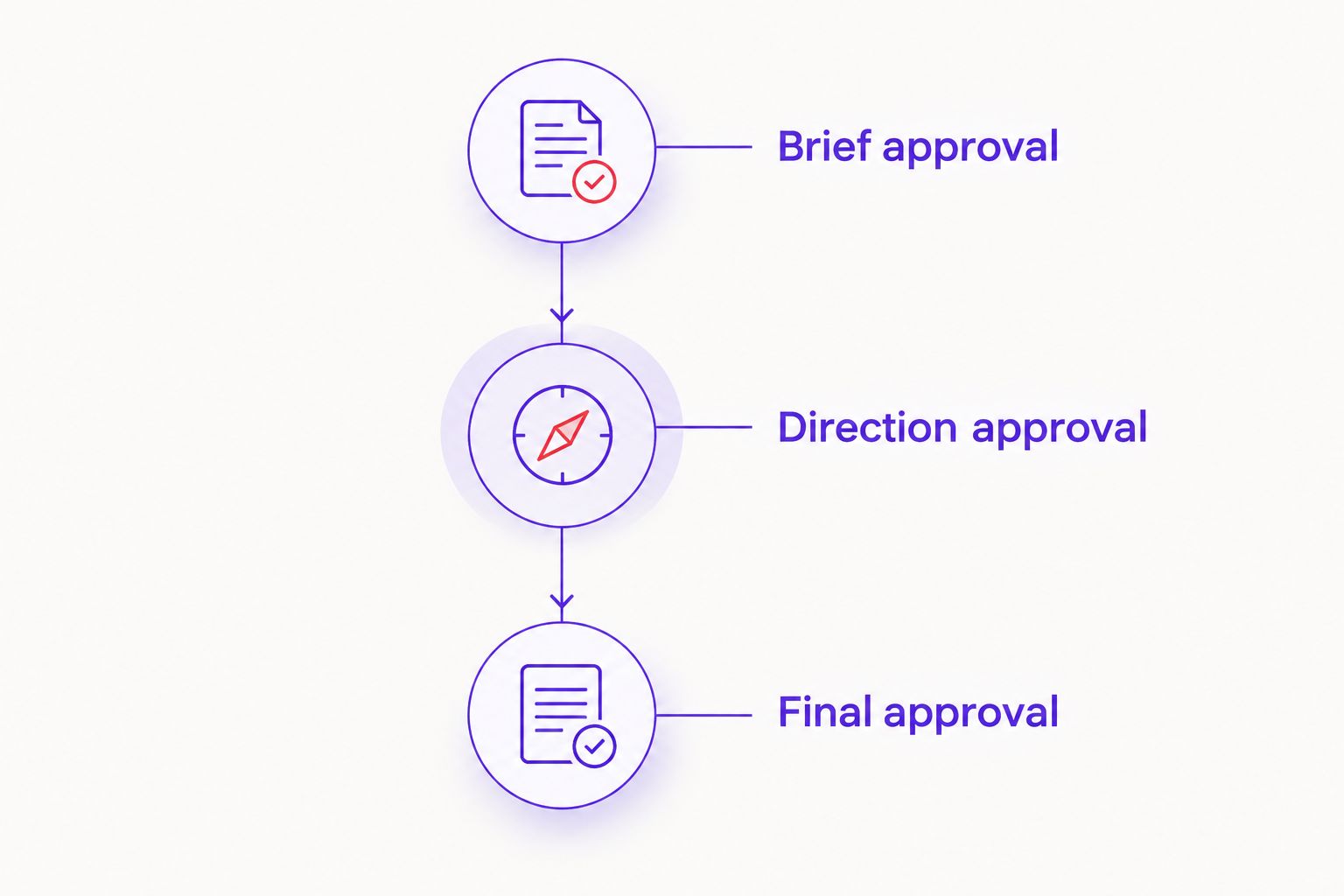
Ask the agency to attach dates and responsibilities to each gate. That turns the timeline into an agreement about decisions, not just production.
Why logo design timelines vary
The schedule should reflect the work you commission. Check these factors against your proposal instead of accepting an unexplained estimate:
- Brief readiness: a settled business name, audience and positioning give the designer defined inputs. Unresolved decisions belong in the schedule.
- Deliverable scope: a logo, identity guidance and launch assets are different outputs. List each one rather than placing everything under a single service label.
- Feedback ownership: the proposal needs a clear route from stakeholder comments to an approved instruction.
- Revision boundaries: distinguish refining an approved direction from replacing it with a new direction. Ask how either change affects the schedule.
- Application requirements: identify whether you need the logo evaluated for packaging, signage, digital use or other agreed settings.
- Handover requirements: confirm which files and usage information must be prepared after design approval.
For your 2026 project, ask which of these factors the quoted schedule already includes. An estimate is useful only when you understand its assumptions.
Avoid treating every delay as a design problem. A pending naming decision or conflicting approval instruction is a project decision that must be resolved before the next stage can close.
Ask 6 questions before hiring a logo designer
Use these 6 questions to evaluate the schedule and the proposal together. Ask for written answers so you can compare the same scope across agencies.
- What exactly will you deliver? Request a list that distinguishes the logo, alternate arrangements, usage guidance and any supporting assets. Broad phrases such as branding package need a defined meaning.
- What must we provide before work starts? Establish whether the brief requires positioning decisions, existing artwork, application requirements or approved business-name details.
- When do we see the first design directions? Separate the presentation date from the final delivery date. Ask what you will review at that presentation.
- How do revisions work? Confirm what counts as a refinement, what counts as a new direction and how changes are approved. Do not leave revision scope implied.
- Who owns each approval? Specify your decision-maker and the agency contact responsible for recording decisions. Ask how conflicting comments will be resolved.
- What happens at final handover? Confirm the deliverable list, the agreed usage rights and any requirements that remain your responsibility.
Choose the proposal that makes decisions and deliverables explicit. An earlier date is not an advantage if it refers to a different or smaller scope.
Ask the agency to show any exclusions beside the included work. That makes the proposal easier to evaluate without assuming that every useful addition comes with the commission.
How do I know whether a logo proposal is rushed?
A rushed proposal leaves the brief, feedback process or final deliverables undefined while promising a completion date. Ask the agency to show how the work moves from approved requirements to approved artwork and usable files.
Speed itself is not evidence of poor work. The issue is whether the proposed schedule includes the work you need and the decisions you must make.
Check whether the presentation includes reasons for the design choices. You should be able to assess the logo against business requirements, not just personal taste.
Does a logo redesign need a different timeline?
A logo redesign needs a schedule that accounts for what stays, what changes and where the replacement will appear. Your brief should distinguish a visual refinement from a change in business positioning.
List the current materials that need updating. Then separate logo approval from the work of replacing the identity across those materials.
For a 2026 redesign, decide whether existing assets will be replaced together or through an agreed sequence. That is a rollout decision, not a detail to leave until the logo files arrive.
Can I start website or packaging work before the logo is finished?
You can define website requirements, packaging specifications and content needs before the logo is finished. Keep decisions that depend on the final identity clearly marked as pending.
Ask the agency which tasks can proceed independently and which require logo approval. Do not treat a draft logo as permission to finalise every branded asset.
A shared brief helps connect these workstreams, but it does not remove their separate review requirements. Approve the relevant design before authorising its use in finished materials.
Run 4 handover checks before closing the project
Use 4 handover checks to confirm that approved artwork has become a usable deliverable. Agree these checks in the proposal, not after the designer announces completion.
- File inventory: match the delivered files to the agreed list. Ask which files are intended for print, digital use and future editing.
- Artwork consistency: check that the files contain the approved logo rather than an earlier revision. Confirm spelling and agreed arrangements.
- Usage instructions: confirm whether colour references, spacing guidance and background-use rules are included. Request only what your scope requires.
- Rights and responsibilities: confirm the agreed usage rights and identify any separately licensed material. Ask who handles future changes and whether that work is a separate commission.
Do not close the project on the strength of a presentation alone. Review the actual delivered files against your agreement.
For a 2026 launch, share the relevant files and instructions with the people producing your website, packaging and other materials. A handover is complete when the agreed deliverables are present and their intended use is clear.
Define your logo project scope
Discuss how your logo brief connects to branding, website design and digital marketing.
FAQ
How long should professional logo design services take?
Professional logo design services should follow a schedule covering the approved brief, design directions, revisions and final handover. Ask for milestone dates and the feedback responsibilities attached to each one.
Can a logo designer finish faster if I already have a brief?
An approved brief resolves decisions that would otherwise need to happen during the project. Ask the designer to confirm whether it contains the audience, positioning, applications and deliverables needed to begin.
Does logo design include a complete brand identity?
Logo design does not automatically include a complete brand identity. The proposal must specify whether typography, colour guidance, application rules and supporting assets are included.
How many logo revisions should I request?
Request a defined revision process tied to the agreed brief rather than an open-ended promise. Confirm how the agency distinguishes refining a selected direction from developing a new one.
What should I send a logo design agency before work starts?
Send your approved business name, target audience, positioning, intended logo uses and relevant existing materials. Name the final decision-maker and explain any requirements that must remain unchanged.
What files should I receive after logo approval?
Receive the files specified in your agreement for the uses you commissioned. Ask the agency to identify the print, digital and editable deliverables, along with any agreed usage guidance.
Should I hire one agency for my logo and website?
One agency fits a project that needs shared decisions across branding and website design. Confirm the separate deliverables, approvals and dependencies so a combined brief does not become an undefined scope.
One last thing
Before approving the logo, ask to see it in the smallest and most demanding applications your brief identifies. An enlarged presentation is not a substitute for reviewing the places where customers will encounter it.
Write those applications into the acceptance criteria. That gives you a specific reason to approve the design—or request a change—without relying on whether everyone likes the same presentation.
Related guides